
Rubber and Spring Mounts for Equipment-Parts Wholesalers
RELIA can build wholesale rubber and spring mount ranges when every item is tied to its load, interface, packing and reorder record.
For an HVAC or pump-parts wholesaler, you can review our range when the intended stock lines can be identified by mount family, supported load and attachment details. Our store presents rubber isolators and spring isolators. Those listings give us starting forms to compare with your service customers' equipment and support-point requirements. Each proposed wholesale line then receives a documented load, interface and selection basis, while a new application remains clearly marked for technical review or a site trial.
You get more value from a range that service customers can identify and compare by documented limits. RELIA manufactures rubber-metal mounts, spring isolators and combined supports in its own factory. We keep the load, interface, deflection, environment and available technical records with each proposed SKU before you publish its origin or performance.
Build the Range Around the Equipment You Serve
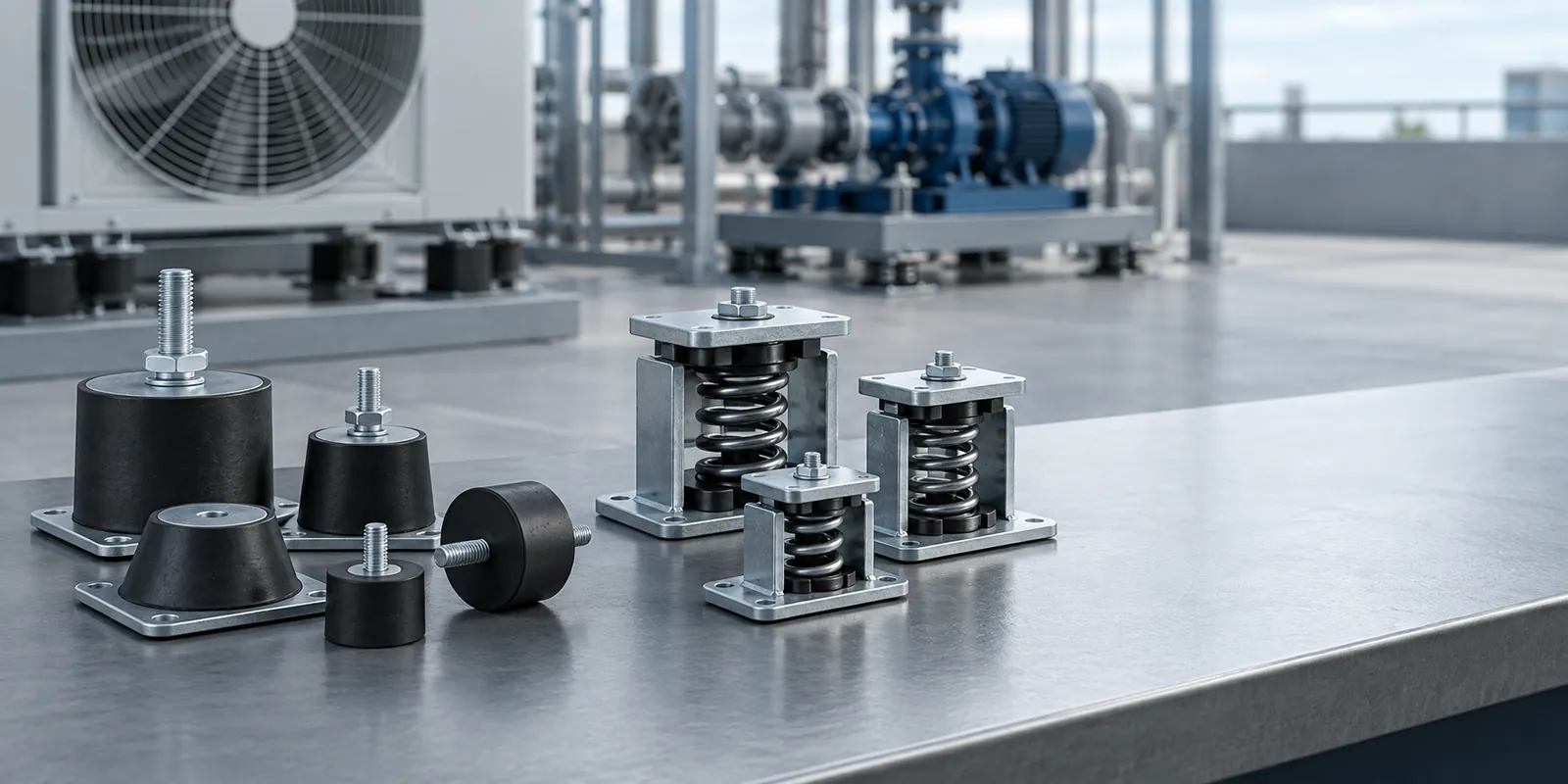
Your customers may buy for fan floors, pump skids, air-conditioning units or other supported equipment. Group the requests by equipment type and installation point, then rank the mount forms that appear repeatedly. We can compare those groups with the anti-vibration product range and show which catalog forms warrant technical review. A one-off machine with an unusual support point should remain a project enquiry rather than inherit the stock number of a common mount.
This approach helps you stock parts that fit a known service need instead of filling a shelf with similar-looking mounts. The equipment list also gives our team a clearer basis for asking which manufacturer data and dimensions matter to each candidate.
Record Load and Mounting Details for Each SKU
When you consider a mount for distributor stock, the maker's supported-load data, working height, top and bottom attachment, available movement and intended environment show what your buyer can reasonably choose. Machine weight alone may hide unequal loads at individual support points. If a service customer knows the support loads and current mounting details, we can use them to compare the candidate's documented range with the actual replacement task.
Our load and deflection guide explains the technical inputs. In a wholesale enquiry, these inputs become a product data sheet and an order identity, not a general lesson detached from the mount being sold.
ONE DATA BASIS
Keep Rubber and Spring Families as Distinct Supply Lines
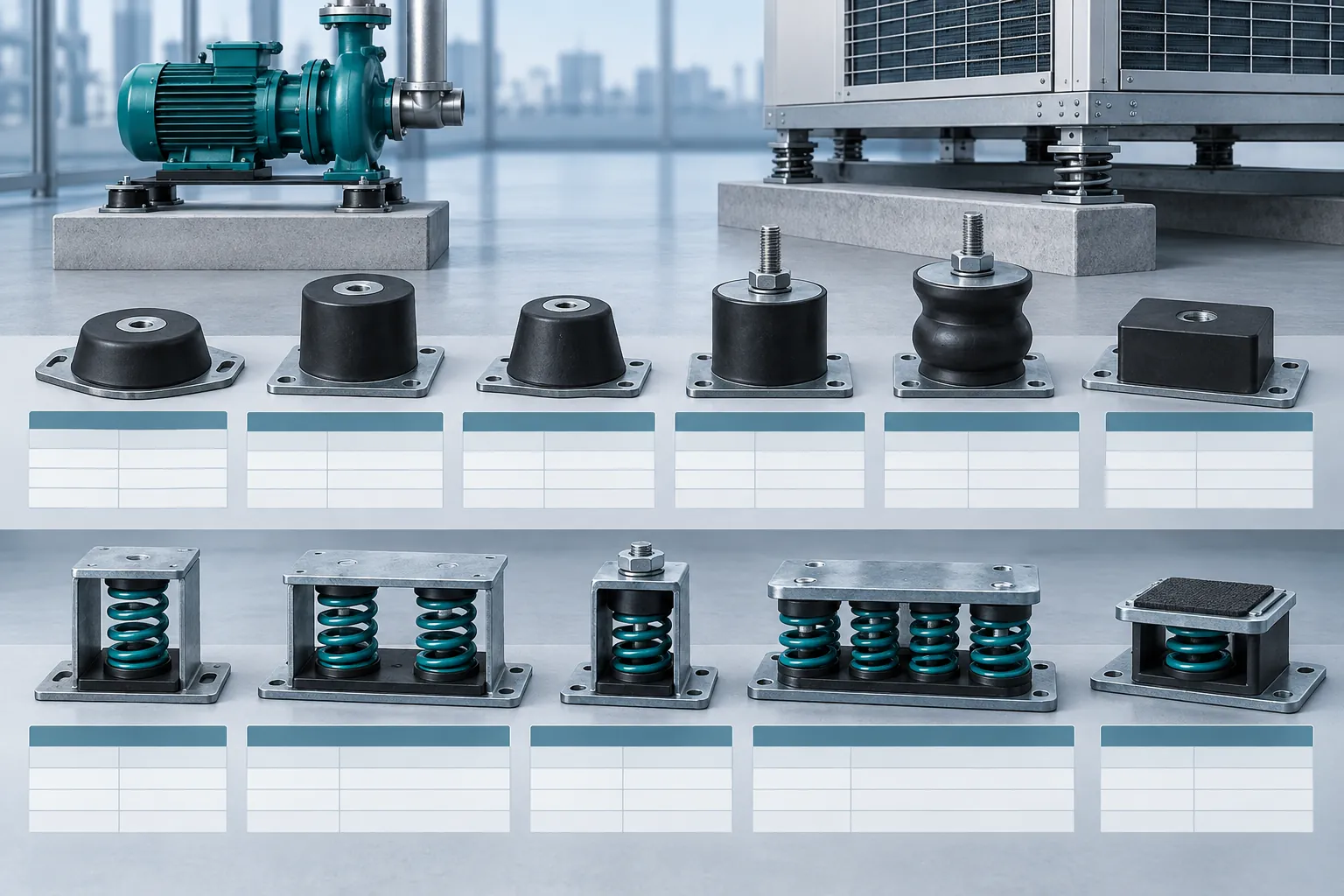
Rubber feet and spring units have different constructions, support behavior and installation interfaces. Put each family on its own SKU line with the accepted equipment use and product data. A familiar outline or matching bolt holes do not make one family an approved substitute for another.
We can compare candidate listings within each family and mark a possible match, a missing-data item or a trial-only item. Your service customer then sees a clear product description rather than an untested rubber-to-spring substitution presented as equivalent stock.
Give Service Dealers Data They Can Use at the Counter
When a dealer asks for a replacement, a photograph may narrow the form but cannot settle its rating. For a rubber or spring candidate from our range, we would put the maker's supported-load data, working height, attachment details and item reference beside your SKU. Your counter team can then identify a documented candidate or ask for the equipment details still missing, rather than call two similar-looking mounts interchangeable.
For several machine models under one purchasing program, our multi-model mount guide covers the OEM-style approval route. A wholesaler's counter range needs separate stock identities and item data that a service buyer can check for one actual installation.
Separate a Mount Rating from an Installation Result
The maker's data may describe a mount's allowed load or movement, while a quieter HVAC unit or pump at a particular site is an installation result. Those are different claims. For the selected item from our range, we can discuss the mounting dimensions, working height and other properties that should be checked against the approved specification. A generic family test cannot establish that every machine using the part will achieve the same result.
If your customers use it as an exact replacement, retain the approved reference, maker data and any agreed inspection record with the quotation. Your service team can compare a later supplied item with that basis without promising a vibration-reduction outcome that has not been evaluated at the site.
Keep Product Identity Through Packing and Reorders
When you name the mount family, your SKU, accepted specification, unit count and any handling detail, we can keep that identity on the proposed receiving record. We will confirm the actual label and carton arrangement for each selected line, especially when rubber and spring products share one buying program. Similar descriptions should not hide different working heights or support ratings.
Barcode, neutral pack and private-label requests can be included with your order list, but they become supplier services only when the line-item response accepts them. A photograph of your present warehouse label can make the comparison practical.
Rubber and Spring SKUs Stay Clear for Distributor Reorders
For a rubber or spring mount program, every machine keeps its own load case, interfaces, environment and approved item reference.
Each distributor SKU needs its equipment use, load case, interfaces, product source, evidence basis, pack identity and reorder terms. Rubber and spring lines remain distinct.
RELIA manufactures rubber-metal mounts, spring isolators and combined supports in its own factory. Each model is approved against its supported load, interfaces, deflection and environment.
Distributor programs can use rubber-metal mounts, spring isolators and combined supports across a typical 50–5,000 kg per-unit load range. Every SKU keeps its own load, interface, environment and test record.
Before release, keep every mount tied to its machine, load case, interface and approved record. Review the company profile or request the current ISO certificate copies.
Mount Range Ordering Details
Use these details to keep trial lines, approved stock and later replenishment easy to distinguish.
Rubber and spring products remain distinct lines
Each family keeps its own load, interface, environment and selection basis even when both appear in one distributor order.
The rating stays tied to a defined SKU
Load and deflection information belongs to the exact mount reference and should not be transferred to a visually similar item.
Reorders use the same technical and packing identity
The approved specification, label and inner-pack information help service dealers receive the same line on later orders.
Send Your Distributor Mount Schedule
When you send the equipment types your customers service, current mount references or photographs, known loads, installation dimensions, quantities, packing needs and destination, we can keep each candidate tied to a real service requirement. Mark exact replacements separately from new product-line candidates. We can return a shortlist of documented candidates, lines needing maker data or a trial, and commercially unresolved items. You can build a distributor range around identifiable parts without promising that one mount fits every machine.
Send your mount schedule, email the part list or discuss it on WhatsApp. A line-by-line response is the right next step before these candidates enter a distributor catalog.