Drawing-Based Rubber Mounts for Generator OEMs
RELIA develops generator mounts from the drawing, equipment load, interface and working environment before sampling.
For generator makers seeking rubber mounts, we can investigate supported load and mounting interface before suggesting a variant. Our product pages include generator rubber-mount examples and generator mounting-foot examples. Your drawing, supported load and machine operating conditions decide whether a shown option or a custom route deserves further assessment.
For a generator OEM, we can begin with support-point loads and both mounting interfaces, then review the rubber configuration your drawing actually requires. This creates a testable candidate for your equipment instead of a broad claim that one mount isolates every generator.
Your Generator Sets the Mounting Task
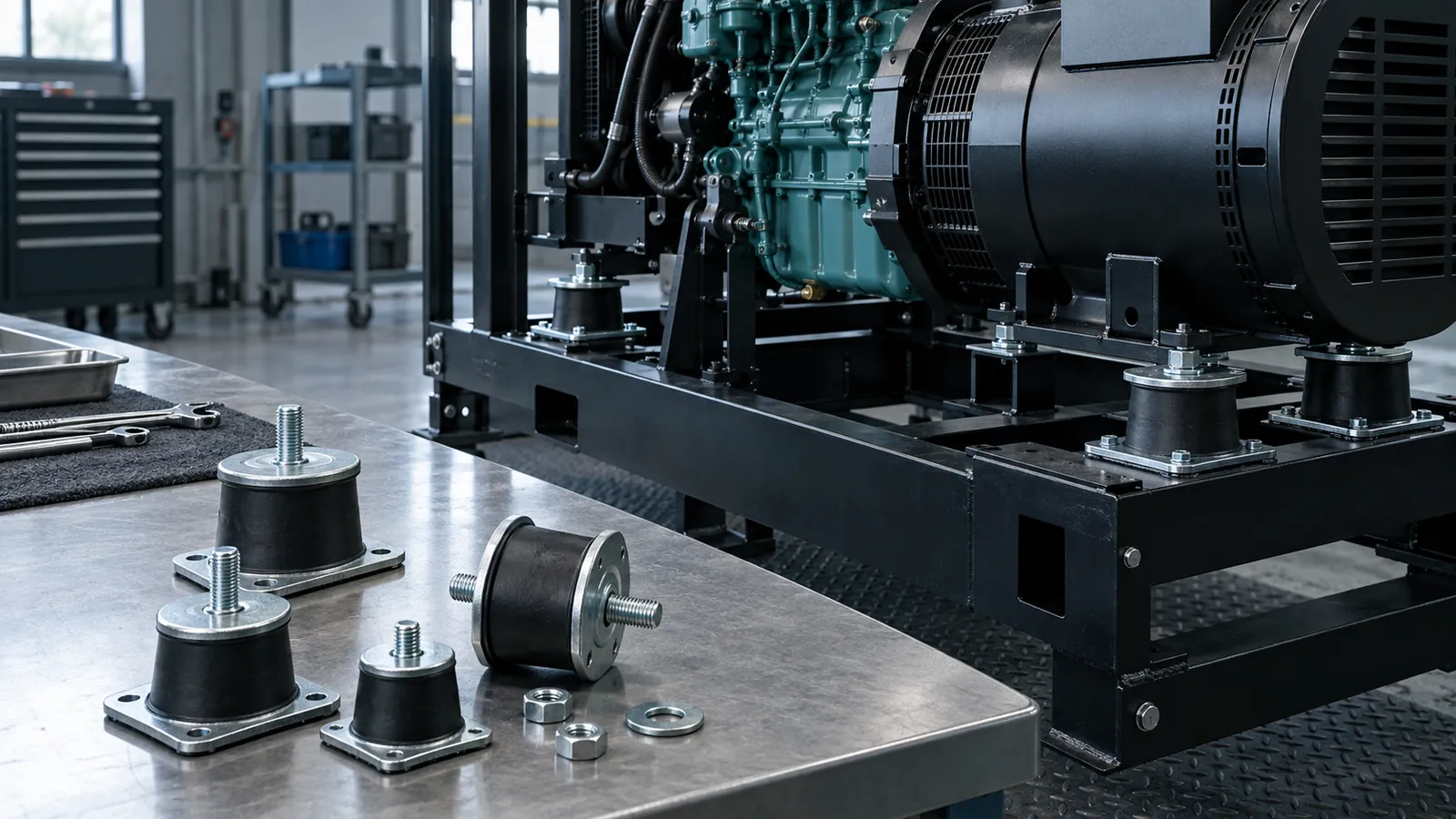
This gives your engineering team a mount shortlist tied to both machine and base, instead of a generic shock-absorber label.
The Rubber Form Must Match the Generator Drawing
Existing rubber-pad and mounting-foot listings show different attachment concepts. Mark the proposed shape, bolt or hole arrangement and installation height on your drawing. A similar photograph does not confirm that its rubber stiffness or load range suits your generator. Compare the rubber isolator range for starting mount forms, while your generator drawing sets the footprint and supported load.
Loads Are Not Always Shared Evenly
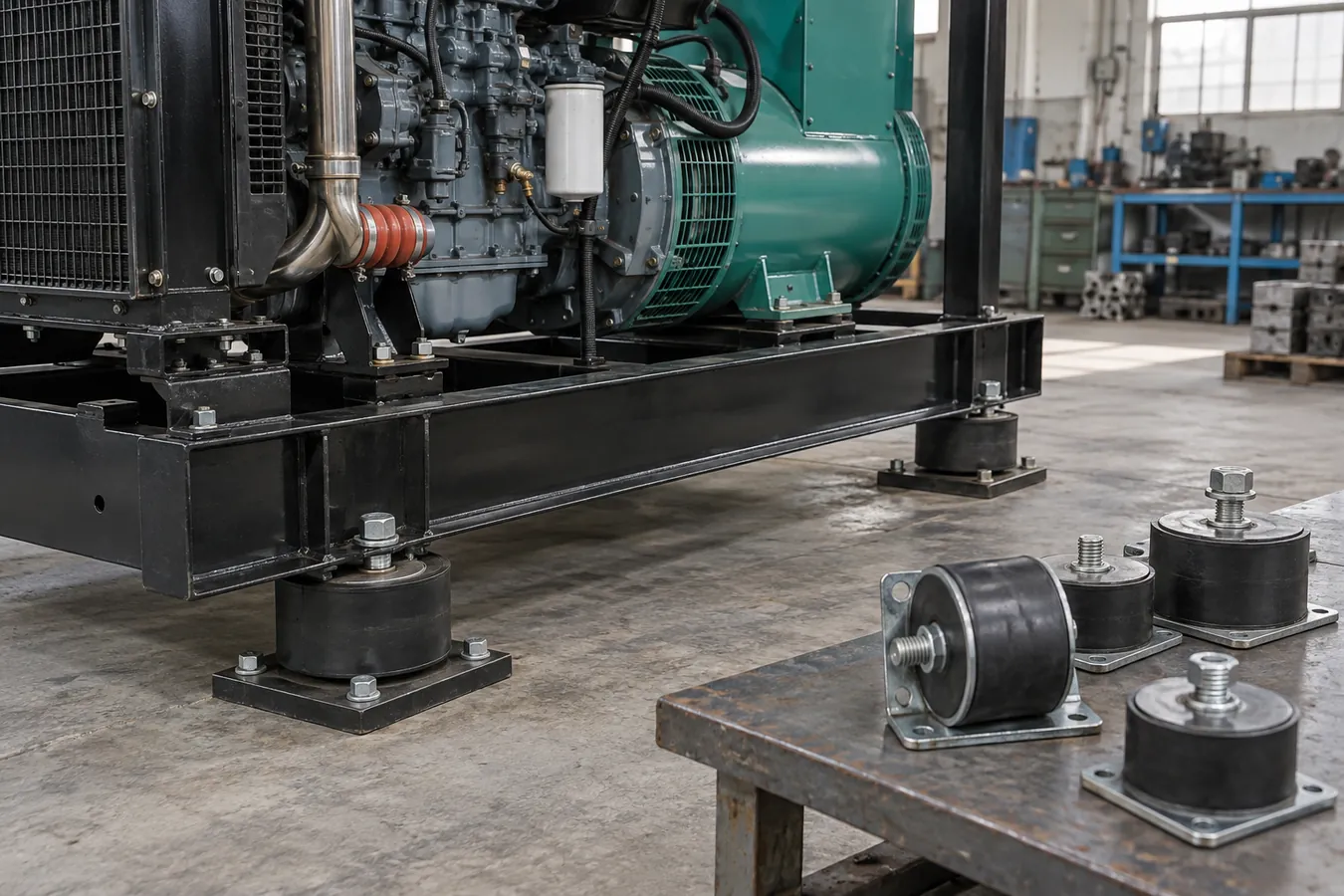
Record a load for each support position, then pair it with the mount's drawing interface and the operating condition you want to evaluate.
A heavy corner should not inherit the candidate selected for a lighter corner from total machine weight alone. Our load and deflection guide explains those inputs. The OEM approval should identify the chosen configuration for every position.
Rubber Specification Needs the Environment
State temperature, oil contact, outdoor exposure and other conditions the mount will meet.
Drawing Interfaces Control Installation
Check hole spacing, thread, pad height, available movement and nearby clearances. A mount that carries load in isolation can still fail the generator installation task if its attachment is wrong. Share the base and machine-side drawings with the mount print.
Performance Needs an Agreed Evaluation
We cannot promise a vibration reduction percentage from catalog photos. Agree on the operating condition and the measurements your engineering team will use to assess a proposed mount.
The Rubber Mount Starts with Load, Interface and Environment
For your rubber-metal mount, we connect the equipment load, metal interfaces, rubber requirement and project test basis before sampling.
Approve the metal interfaces, rubber requirement, supported-load case, environment, drawing revision and project test method. Factory inspection and test records are confirmed for the order.
RELIA manufactures rubber-metal mounts in its own factory, including metalwork, vulcanizing, assembly and inspection. Typical project ranges are 50–5,000 kg per unit, 5–50 mm deflection and 45–75 Shore A, supported by a spring load test bench and universal testing machine.
Real order RL-RM-2401: a US industrial-equipment manufacturer approved rubber-metal mounts for 1,000–3,000 kg per unit after hardness, compression-load and dimensional checks. In 2024, 20 samples were completed in 30 days before repeat demand of 1,000–5,000 units per year.
Before release, keep the approved mount reference, load case, drawing and project test record together. Review the company profile or request the current ISO certificate copies.
A Pilot Installation Can Refine the Drawing
Try a proposed sample in the intended support arrangement and observe fit, clearance and operating behavior. Record any changes before repeat orders. A mount approved only by outside dimensions may not resolve the generator's actual problem.
Send the Mount and Equipment Data
Send the mount drawing, generator model, working weight and support positions, operating conditions, quantity and intended evaluation method. Mark any current mount that has failed. Share these details with us for a defined candidate review.