
Rubber and Spring Mount Sourcing Across Machine Models
RELIA maps each machine model to a verified rubber or spring mount instead of treating one mount family as universally interchangeable.
For an equipment OEM reviewing several mount types, we can compare catalog families while keeping each model approval separate. Our product range includes rubber mounting feet and industrial spring mounts. A one-supplier program is possible to enquire about, but each model's suitability and coordinated supply require separate confirmation.
Your OEM team needs a model-by-model approved mount list, not one rubber and one spring product repeated across machines. We can start with the different support and operating conditions, then identify where parts can genuinely be shared and where they must remain separate.
Model Variety Needs a Support Matrix
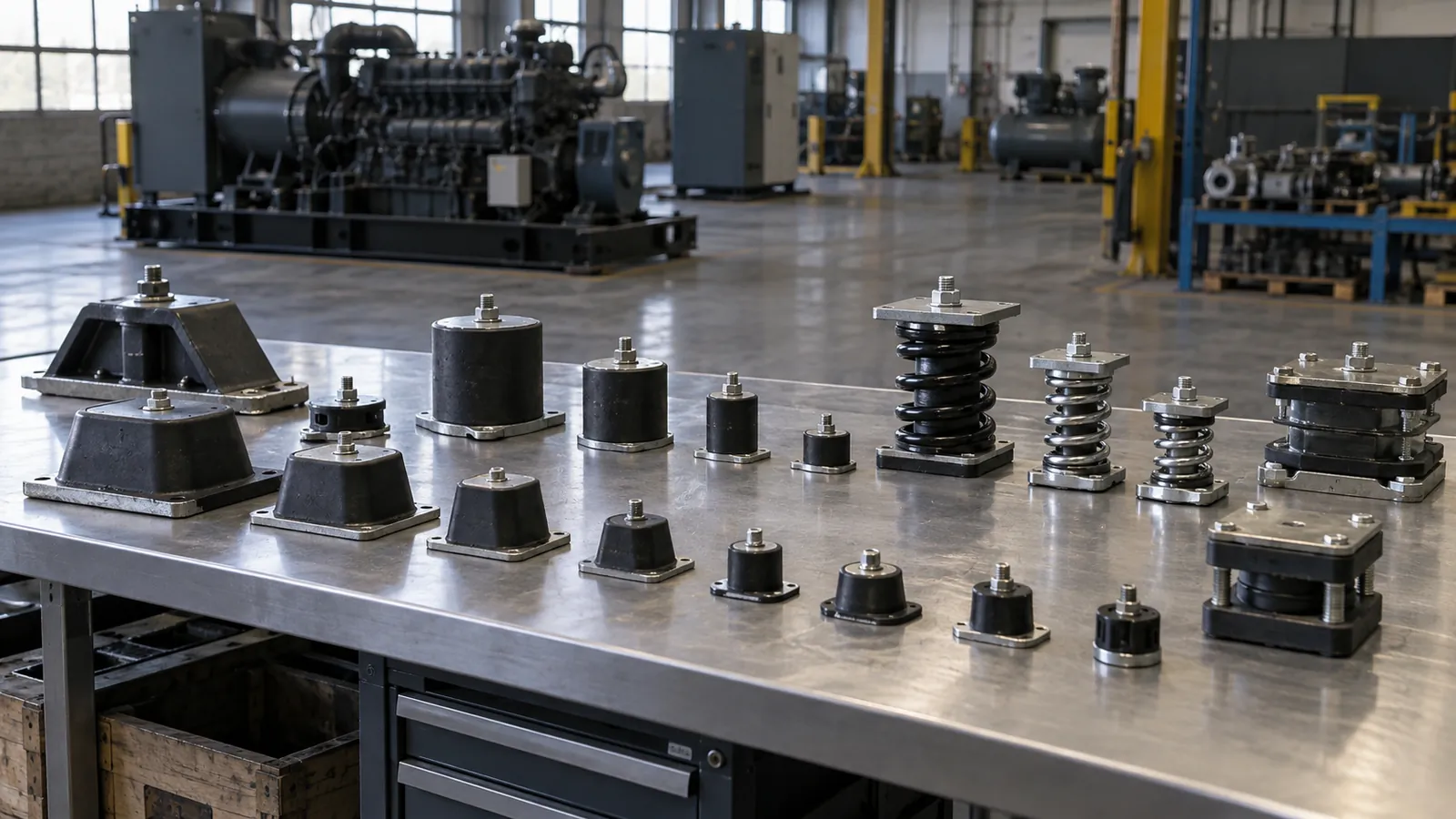
A shared SKU enters the program only when every intended model has its own accepted basis. That lets procurement reuse a part number without hiding an untested application.
Rubber Candidates Have Distinct Jobs
The rubber family may offer a compact mounting form for some machines, but no listing establishes its load or dynamic performance for your model. Name the attachment and operating conditions for each rubber candidate. That lets us distinguish genuine matches from convenient lookalikes. Compare the rubber isolator range only for models with the same mounting and load case, then give each approved model its own reference.
Spring Candidates Need Their Own Inputs
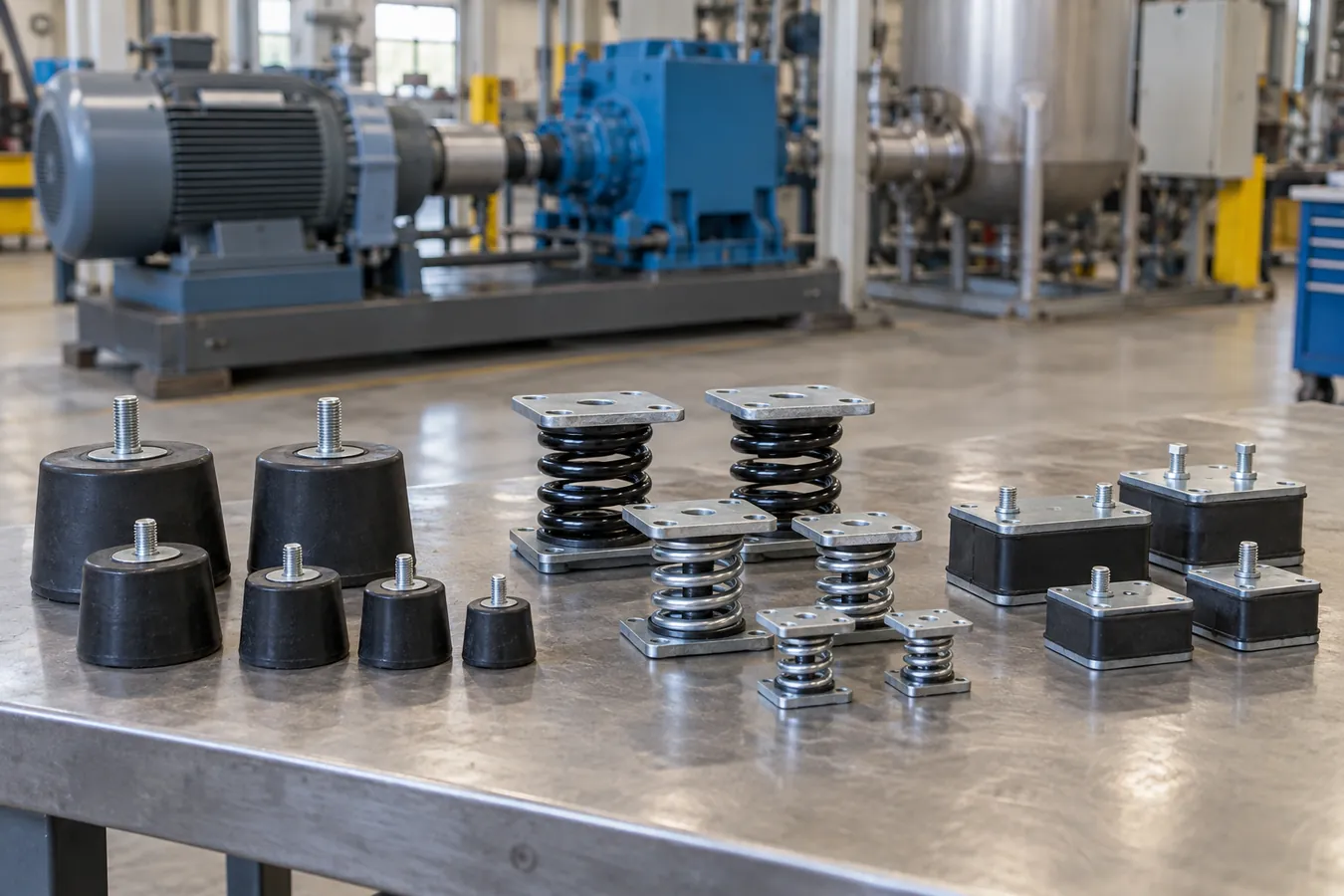
For spring options, state supported load, operating frequency, movement limits and space. These are different checks from selecting a rubber mounting foot. A shared supplier enquiry should preserve the different technical basis for each family. For spring-supported models, review the spring isolator range against their separate support-load and space requirements.
Mounting Interfaces Prevent Accidental Substitution
Keep machine-side and foundation-side drawings with each proposed mount.
Cross-Model Reuse Needs Explicit Proof
If your engineering team wants one mount for two models, show why the loads, mounting and performance requirements overlap.
Our load and deflection guide supports that comparison. Do not infer cross-model interchangeability from one product title. Record which models have actually been tested or approved.
Every Approved Model Needs Its Mount Specification
Request the technical data and inspection basis for each chosen rubber or spring item. Our site is a first-party catalog, not an independent test of your machine range. A combined program should retain part-specific evidence rather than one broad quality statement.
Procurement Identity Should Stay Stable
Give each approved item a model, drawing revision and internal part number.
Rubber and Spring Mounts Stay Separate by Application
For a rubber or spring mount program, every machine keeps its own load case, interfaces, environment and approved item reference.
Every machine model needs its own mount reference, load case, interfaces, source, inspection basis and packing identity. Cross-model reuse requires explicit fit and load evidence.
RELIA manufactures rubber-metal mounts, spring isolators and combined supports in its own factory. Each model is approved against its supported load, interfaces, deflection and environment.
Usual project fatigue validation is 100,000–500,000 cycles, depending on the approved load case and specification. Test records are linked to the selected model and project.
Before release, keep every mount tied to its machine, load case, interface and approved record. Review the company profile or request the current ISO certificate copies.
One-Source Supply Needs a Model-Level Quote
Send Your Model and Mount Schedule
Send machine models, load distribution, operating speeds, attachment drawings, current mount numbers, quantities and destination. Mark where you seek an exact replacement and where you allow a redesigned support. Share these details with us for a bounded supply proposal.