
Non-Standard Solid Rivets for Drawing-Based OEM Work
RELIA develops a non-standard solid rivet from the drawing, mating hole and installation method, then confirms it through a sample.
For a non-standard solid rivet, we can review your drawing and the installed joint before discussing a manufacturing candidate. Our product pages include a non-standard solid-rivet listing and a shoulder solid-rivet listing. These are reference shapes. Your drawing and joining process determine the actual candidate.
The choice between those forms depends on the finished joint, especially the formed head, material stack and any shoulder that controls position. We can discuss a rivet production plan once the installed result you need is documented, not merely the loose part outline.
The Rivet Must Suit the Jointing Method
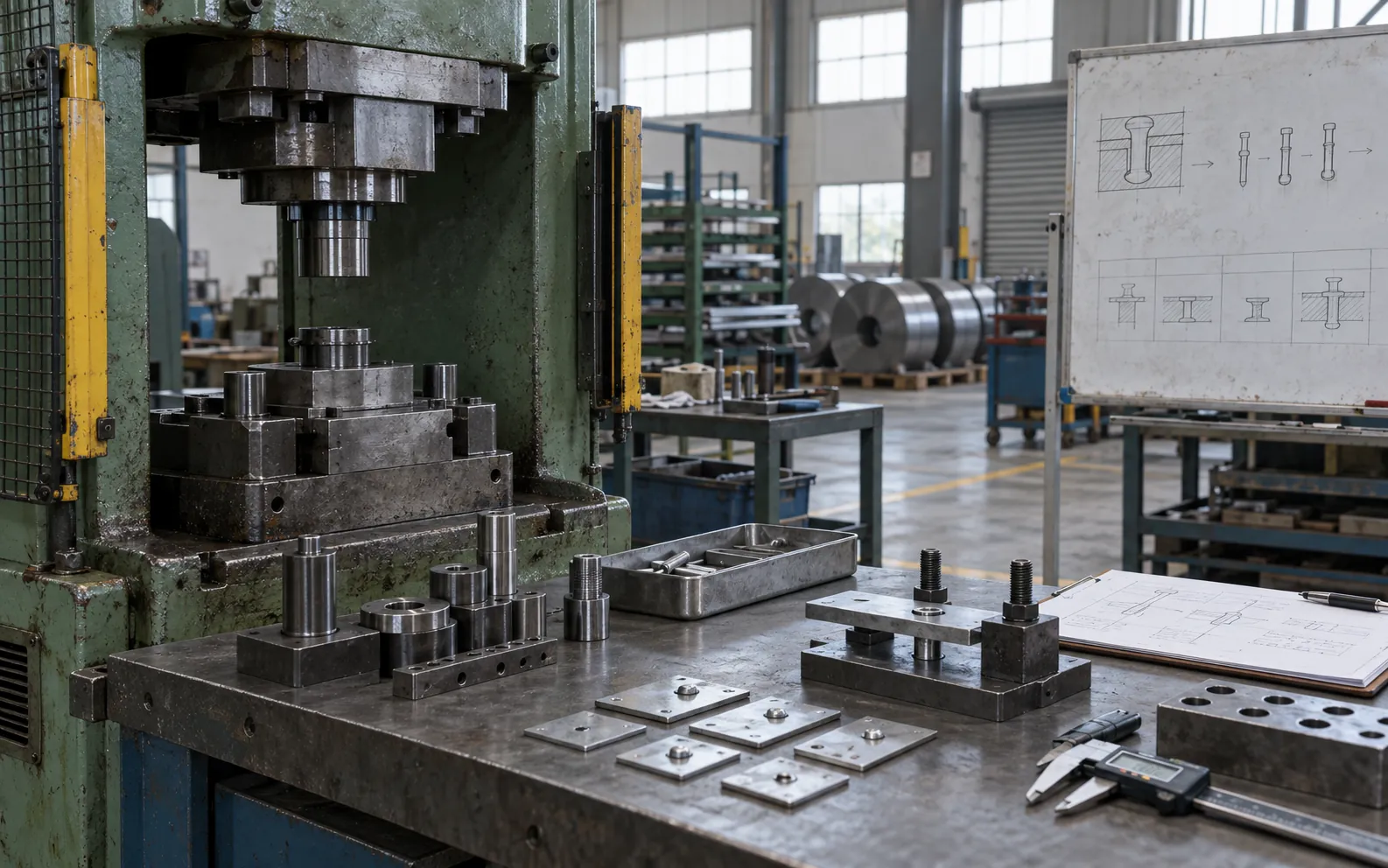
We can use your installed-joint reference to review the rivet's form and acceptance points together. The profile does not identify the production method for this exact rivet, so that route must be confirmed before manufacture.
Head and Shoulder Geometry Carry Different Jobs
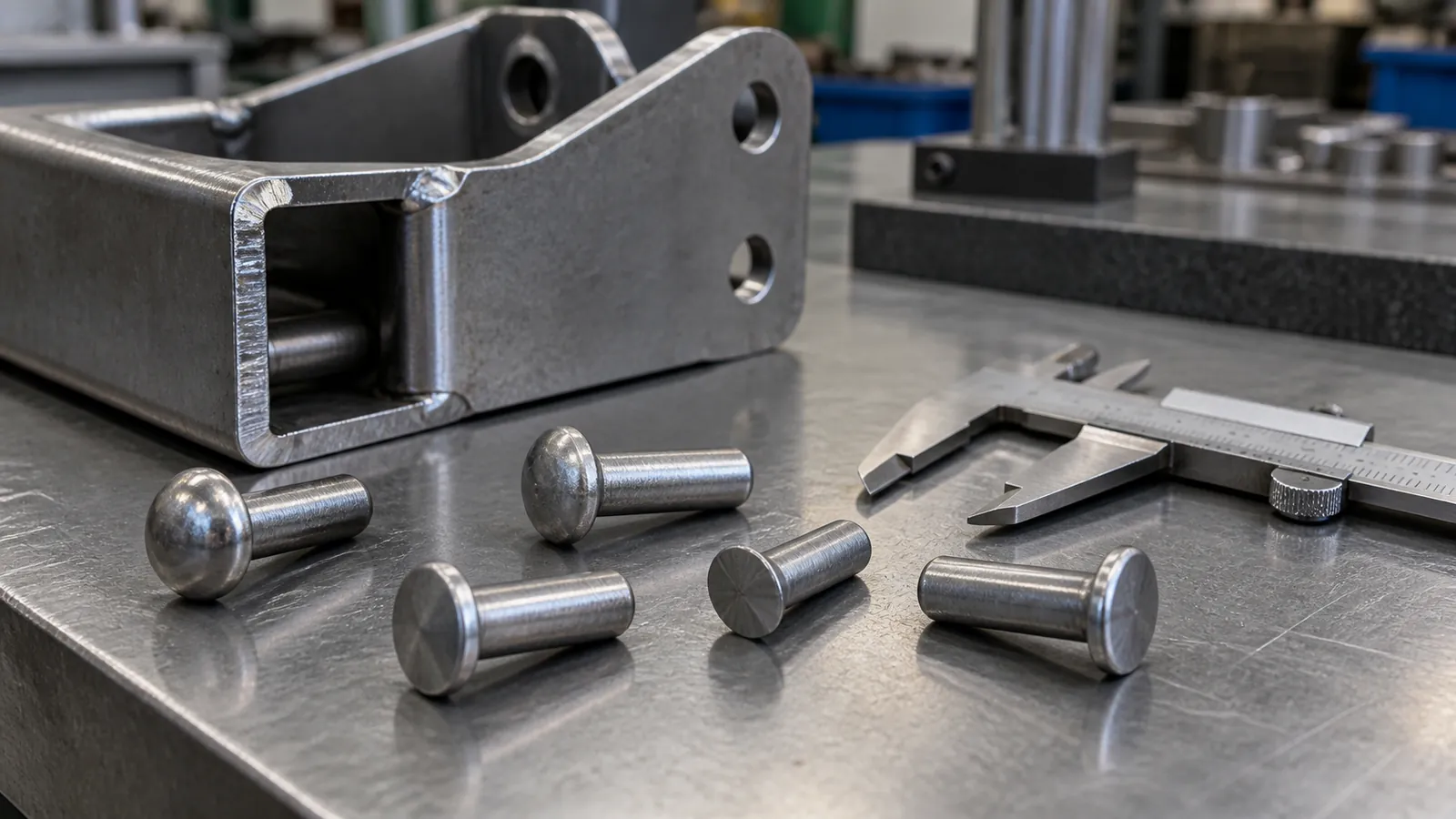
The catalog examples show that head and shoulder arrangements vary. Identify the features controlling seating, movement or clearance on your drawing. A visually close listing should never replace the specified geometry for an OEM connection. You can compare the fastener range for a starting shape, but the formed head and shoulder on your drawing still govern the custom rivet.
Material and Surface Requirements Need One Specification
The quotation names one proposed material and clearly records any acceptable substitution.
Drawing Revisions Protect Repeatability
Keep the hole callout, rivet dimensions and approved drawing version together. A changed hole or panel thickness can affect the rivet even when its own print is unchanged.
Our custom fastener RFQ guide provides a reference for organizing the drawing and sample. That shared basis makes repeat orders easier to compare with the accepted trial.
A Trial Should Test the Formed Joint
Assess the proposed rivet after installation in the actual material stack.
The Custom Rivet Moves from Drawing to Joining Trial
For your fastener, we connect the joint, drawing, material, finish and inspection basis before moving from sample to repeat supply.
Approve the drawing revision, material, head and shoulder geometry, joining trial and inspection points before production. The quotation identifies the route used for this non-standard part.
RELIA manufactures standard and custom fasteners in its own factory, including bolts, screws, nuts, washers and solid rivets. The confirmed range covers M3–M64 and 5–600 mm length, with special projects assessable to M80 and more than 500 specifications available.
Real order RL-FS-2502: a US construction-machinery parts buyer used sample reverse engineering and a controlled drawing for alloy-steel M30–M48 custom fasteners. In 2025, 50 samples were completed in 30 days and passed dimensional, thread, hardness and tensile checks before 20,000–50,000-piece batch orders.
Before release, keep the exact drawing or SKU, quotation and inspection record together so receiving can trace the fastener it approved. Review the company profile or request the current ISO certificate copies.
Drawing and Joint Determine Rivet Feasibility
Feasibility, tooling, minimum order and timing depend on the shape, material and quantity. Do not treat the word custom in a catalog title as approval of your drawing. A factory recommendation becomes meaningful only when a production plan and acceptance reference are agreed.
Send the Rivet and Joint Drawings
Send the rivet print, hole and material stack, installation method, projected quantity and any failed current sample. Mark the dimensions that matter after forming. Share these details with us to discuss an actionable manufacturing candidate.