
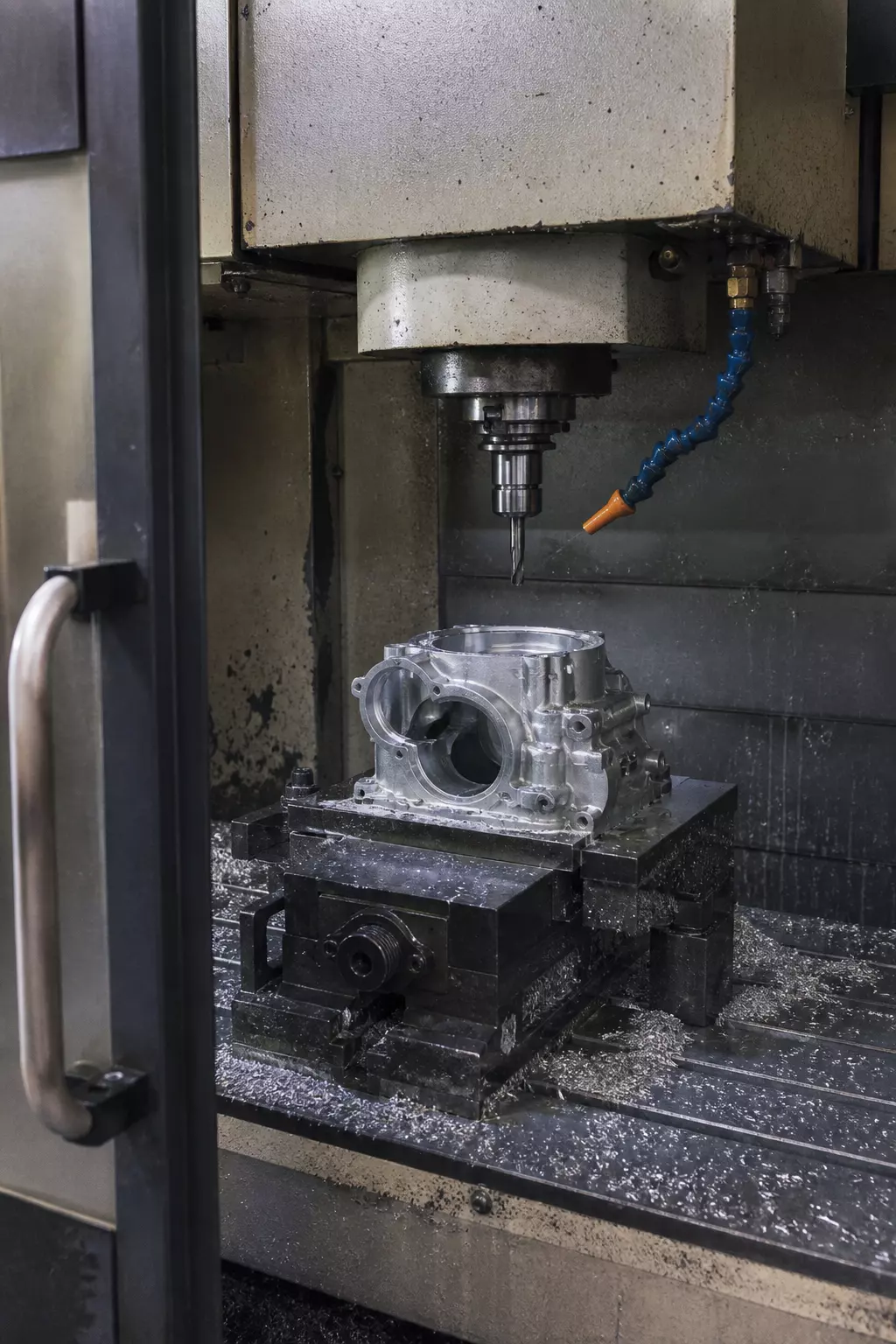
Knife Guard Supply Review from an Old Sample
RELIA can reproduce an old knife guard after the unworn dimensions, cutterbar fit and material requirements are verified.
If your knife guard has no complete drawing, we can use a measured sample and header references to investigate a replacement. Our product pages include forged guard examples and double-guard examples. These references help identify a family. Reproducing your exact guard remains conditional on measurements and technical review.
For a repair shop, the first useful outcome is an existing guard candidate that survives a mounting-feature comparison. If the old part has lost its original shape, we can discuss a measured drawing from intact areas and mating components rather than copy the damage into a new part.
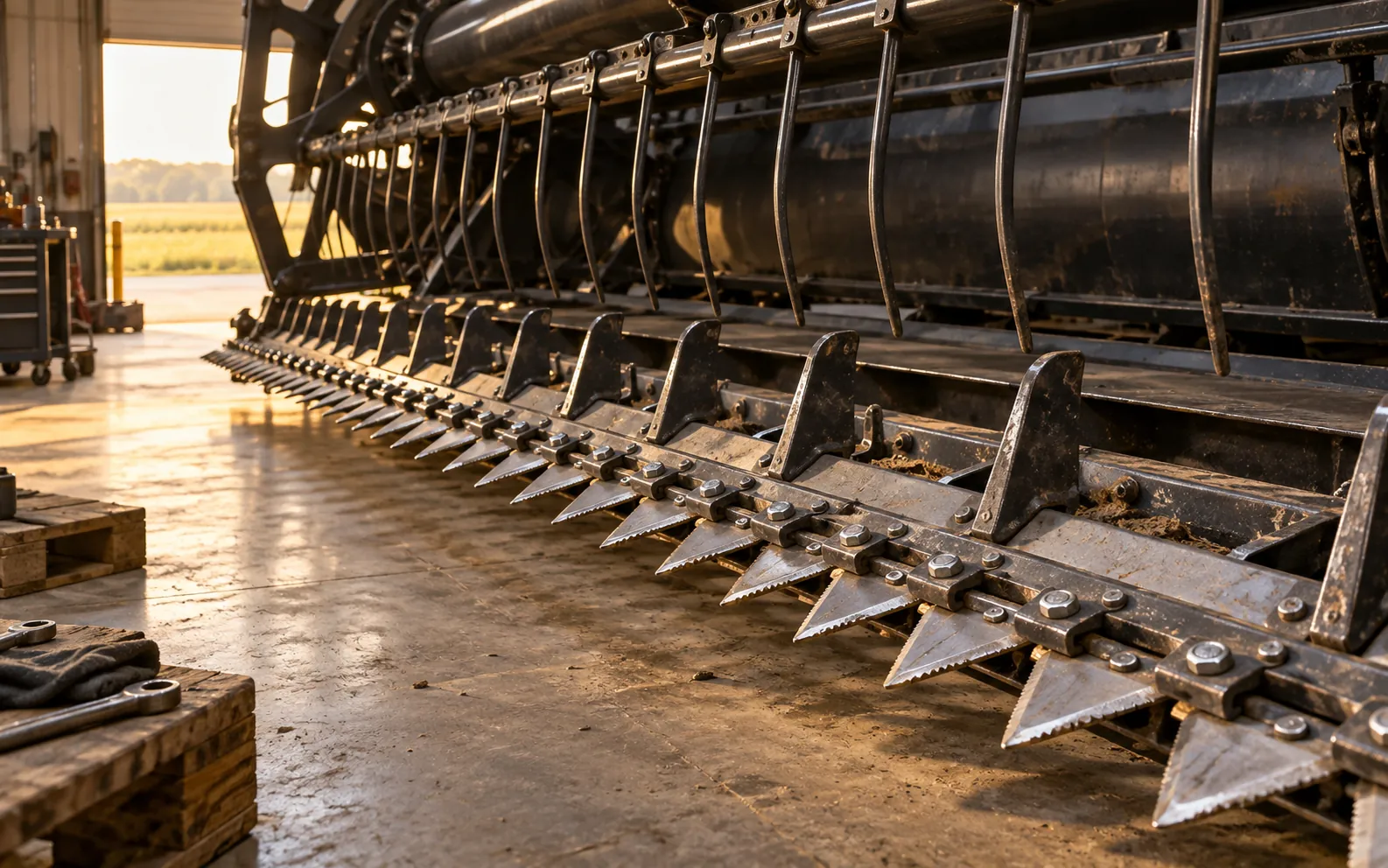
An Old Guard Preserves Useful Clues
Use the intact areas and an assembly photo to narrow the candidates. If none fits, we can review a measured drawing and sample feasibility before your shop commits to a replacement route.
Wear Can Mislead a Copying Project
The working surfaces may have lost material, bent or been repaired. Mark what you know is damaged and what still represents the original geometry. A new part should not blindly copy a worn edge or a distorted hole.
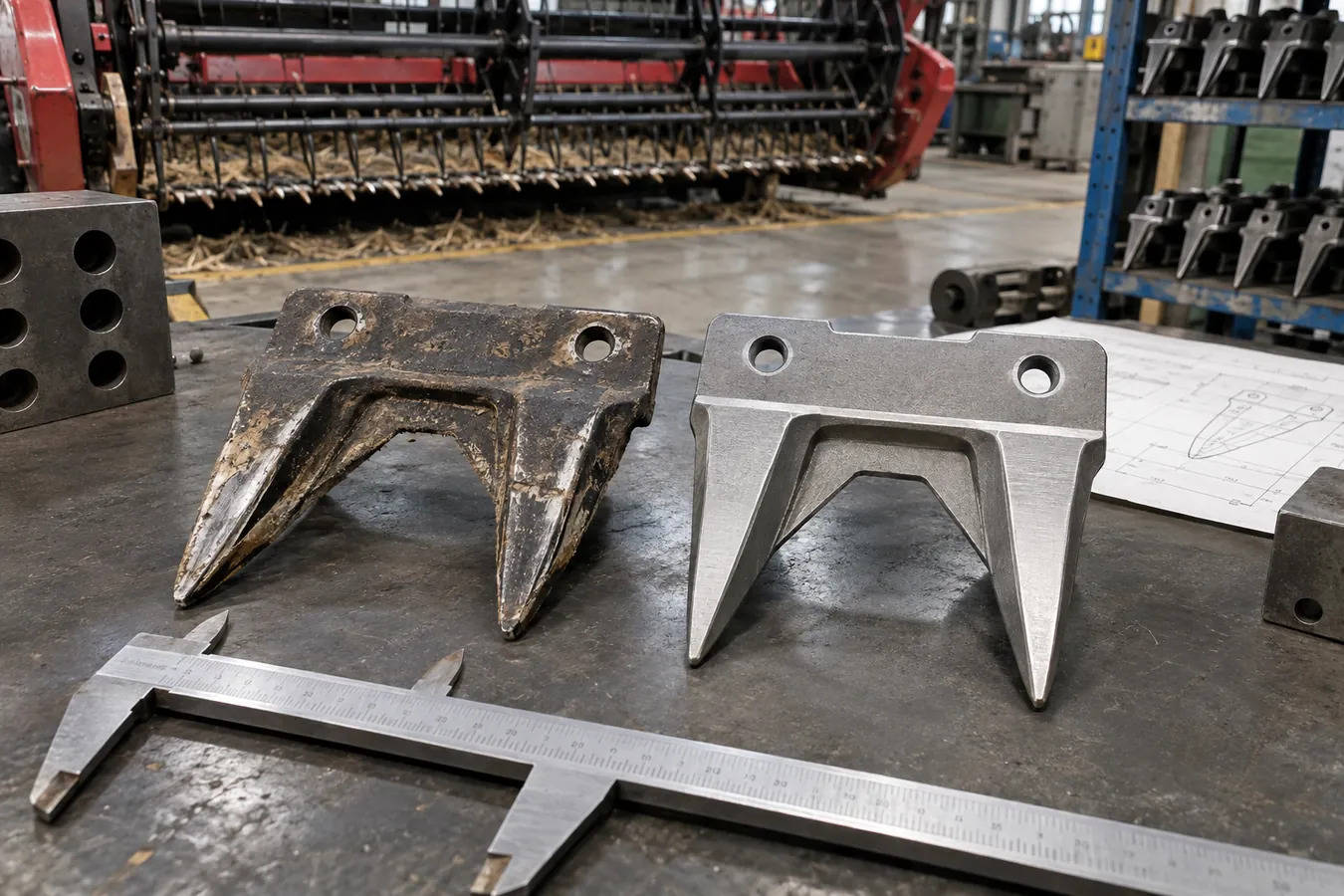
Mounting Features Set the First Comparison
Record hole spacing, hole size, fixing orientation and the surfaces meeting the cutterbar. Those measurements decide whether a catalog guard is close enough to investigate.
Single and Double Guards Are Different Candidates
The catalog includes different finger arrangements. Identify which arrangement your header uses and whether neighboring sections move through one or two guard openings. That separates a useful shortlist from a collection of visually similar spare parts. Compare the old sample with the knife-guard range using unworn mounting points, not the damaged edge as the original shape.
The Original Sample Becomes a Controlled Knife-Guard Reference
For your cutting part, we keep the machine reference, mating geometry, wear requirement and field-fit result connected from matching through repeat supply.
The old sample is evidence of the current part, not proof of its original dimensions. Approval needs unworn interfaces, machine context, a controlled replacement reference and a fit check.
RELIA manufactures harvester cutting parts in its own factory. The range includes knife sections, guards, chopper blades and knife bars, with more than 300 compatible SKUs, 50–100 common SKUs available for quick supply and 800,000–1,200,000 knife-type pieces of monthly capacity.
The approved part reference controls production, and fit, dimensions, material and hardness checks follow the selected cutting part.
Before release, keep the machine or part reference, sample result, quotation and inspection record together so the cutting part remains traceable. Review the company profile or request the current ISO certificate copies.
Fit Should Be Checked with the Cutting Assembly
If a candidate can be sampled, install it with the actual knife section and fasteners. Check clearance and movement in the header. A standalone dimension match cannot settle the whole cutting relationship.
Choose Stock Matching Before New Tooling
If an existing catalog guard can be shown to match the required features, it may provide a simpler enquiry path. If no match survives measurement, a controlled drawing from the usable sample becomes the next step. Neither route should be assumed before review.
Common Ordering Clarifications
These details help you prepare a clearer quotation request and avoid repeating the same checks during sampling.
A worn guard can still start the review
We use unworn datums, mounting holes, adjacent parts and machine references instead of copying the worn profile without checking it.
A photo supports identification but not final fit
Final matching still needs dimensions, mounting position and the relationship with the knife section and cutterbar.
New tooling follows the matching review
We first compare existing forms. Tooling becomes a project decision only when no verified candidate meets the required fit.
Send the Sample and Machine References
Send the old guard, photographs, machine information, measured mounting features and expected quantity. Include a mating section or its number if available. Share these details with us for a realistic replacement review.