Dredging Hose Candidates for Sand-and-Mud Projects
RELIA selects dredging hoses by line position, slurry conditions, diameter, pressure and connection dimensions.
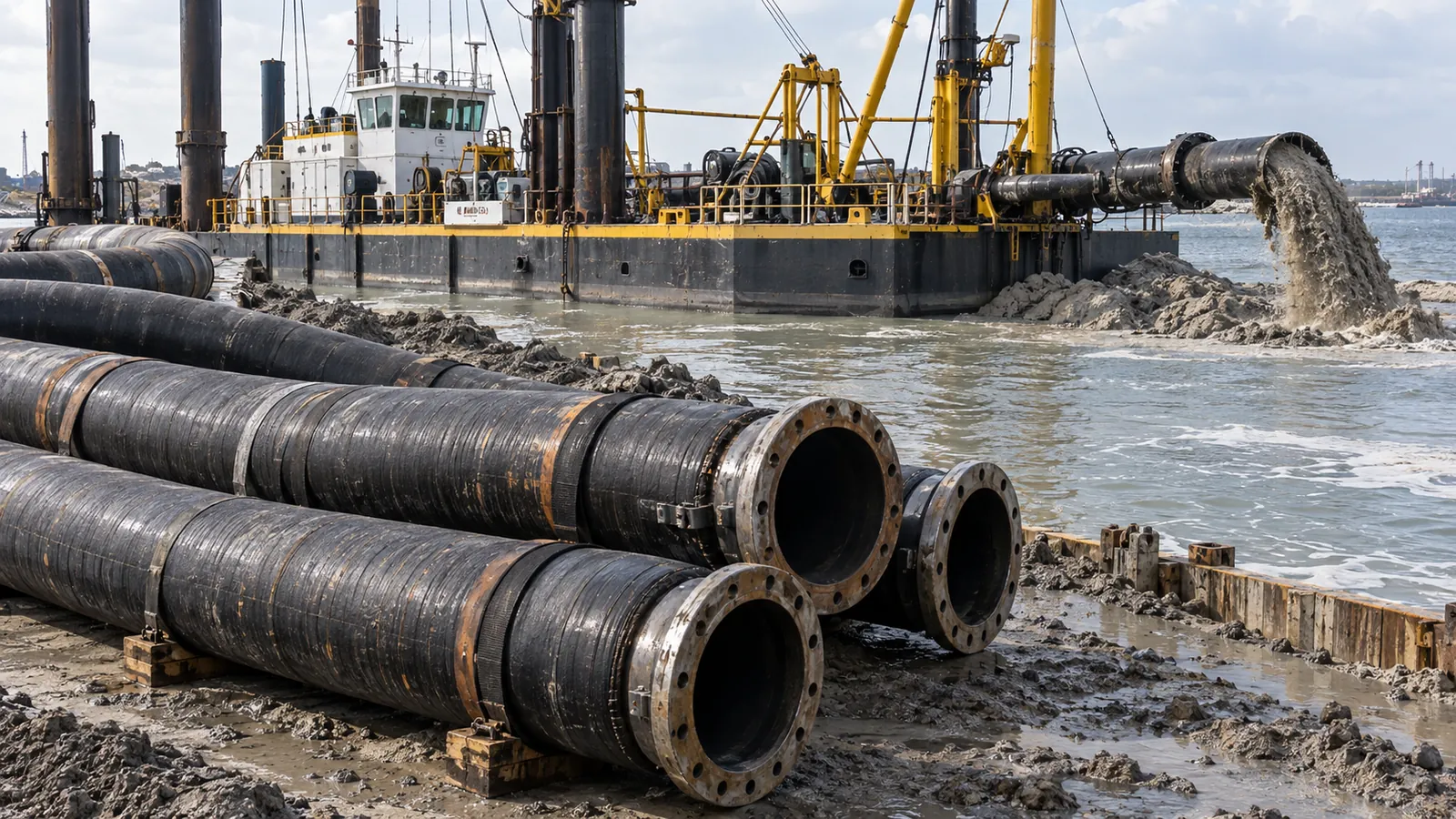
For your dredging hose schedule, we can compare suction, discharge and flanged examples by installed position. Our product pages show sand-and-mud flanged hoses and suction/discharge hose examples. The proposed hose must be reviewed against flow duty, connection ends and installation, not selected from the dredging word alone.
We can organize your hose request by suction and discharge position, with finished length and end fitting named for each location. That gives your contractor team a practical purchase schedule and avoids carrying one flanged product description across several different duties.
Separate Suction from Discharge Positions
We can narrow a configuration for each row instead of asking your crew to interpret one broad hose description for the whole dredging line. Compare the dredging-hose range after identifying suction and discharge positions, since one hose title does not approve both duties.
Sand-and-Mud Service Needs Real Duty Data
Describe the mixture, solids, operating pressure or vacuum and expected flow. A product title saying wear resistant does not confirm service life for your material. Request configuration-specific construction and application information before comparing options.
Diameter and Length Follow the Line Layout
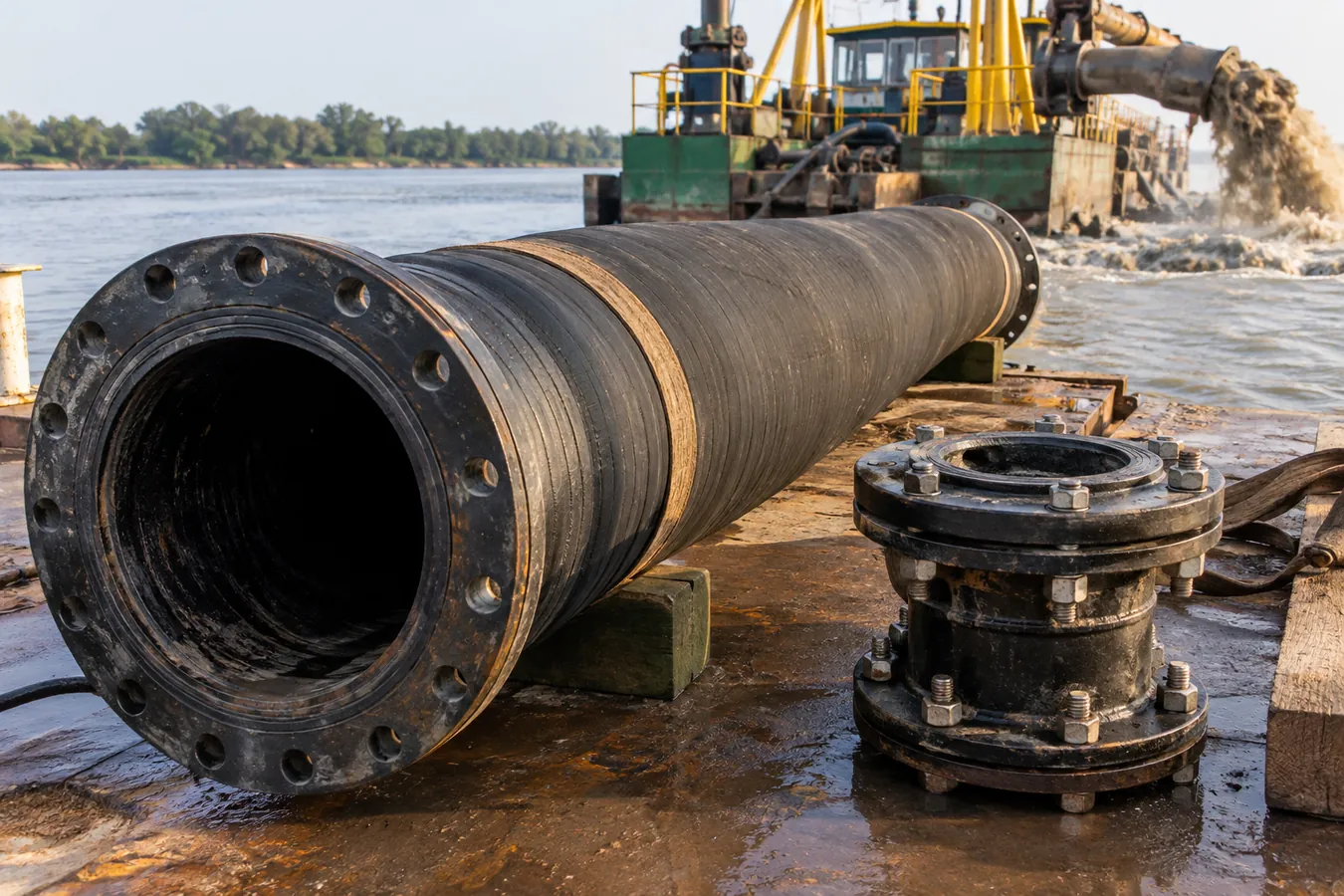
Give pipe diameter, required hose length and bend or movement arrangement at each position.
End Connections Are Part of the Hose
Provide flange standard, drilling, fitting orientation and mating equipment details for each installed position. The flanged example cannot be approved simply because both ends are called flanges.
Put the end drawings beside the pipe and pump connection drawings so the supplier can identify a matched assembly rather than quote a hose body in isolation.
Specify the Required Hose Wear Basis
No catalog snapshot supports a universal wear-life claim.
Handling and Installation Affect the Decision
Describe movement, support, lifting and the space available during assembly. A long hose under an unsuitable bend or unsupported load can face a different risk from its catalog description. Your project engineer should review the installation.
Every Dredging-Hose Position Keeps Its Own Configuration
For your pipeline item, the actual position, dimensions, medium, pressure and connection details stay with the quoted configuration and inspection record.
Separate suction and discharge positions, then approve diameter, length, medium, solids, connections, handling and wear evidence for each hose. The quotation identifies the responsible source.
RELIA manufactures rubber joints, metal bellows, industrial and dredging hoses, valves, pipe connections and repair products in its own factory. A pressure and leak test bench supports project inspection, and each line is approved against its own service conditions and test plan.
Dredging hoses cover 100–1,000 mm inside diameter, 5–20 m standard length and 0.8–2.5 MPa working pressure. Typical burst pressure is at least three times working pressure and bend radius is approximately 6–10 times diameter.
Before release, match the actual line position, approved configuration, quotation and test record to the item you plan to install. Review the company profile or request the current ISO certificate copies.
Send the Hose Location List
Send project layout, suction or discharge duty, mixture description, pressure or vacuum, diameter, length, end fittings, quantity and destination. Mark the positions causing the most downtime. Share these details with us for useful project candidates.