Speed Bump and Wheel Chock Candidates for Industrial Sites
RELIA matches speed bumps and wheel chocks to vehicle routes, axle loads and parking positions before confirming the site package.
For an industrial site, we can compare vehicle-control products by the separate needs of roadway traffic and parked vehicles. Our product pages show rubber speed-bump examples and rubber wheel-chock examples. A roadway crossing and a parked vehicle require different placement and dimensions. These products should not be described as interchangeable.
We can organize the purchase by traffic lane and parked-vehicle position so each product has a clear job. This helps your site team distinguish a roadway installation from a portable wheel-restraint procedure before quantity and delivery are discussed.
Map Vehicle Movement on the Site
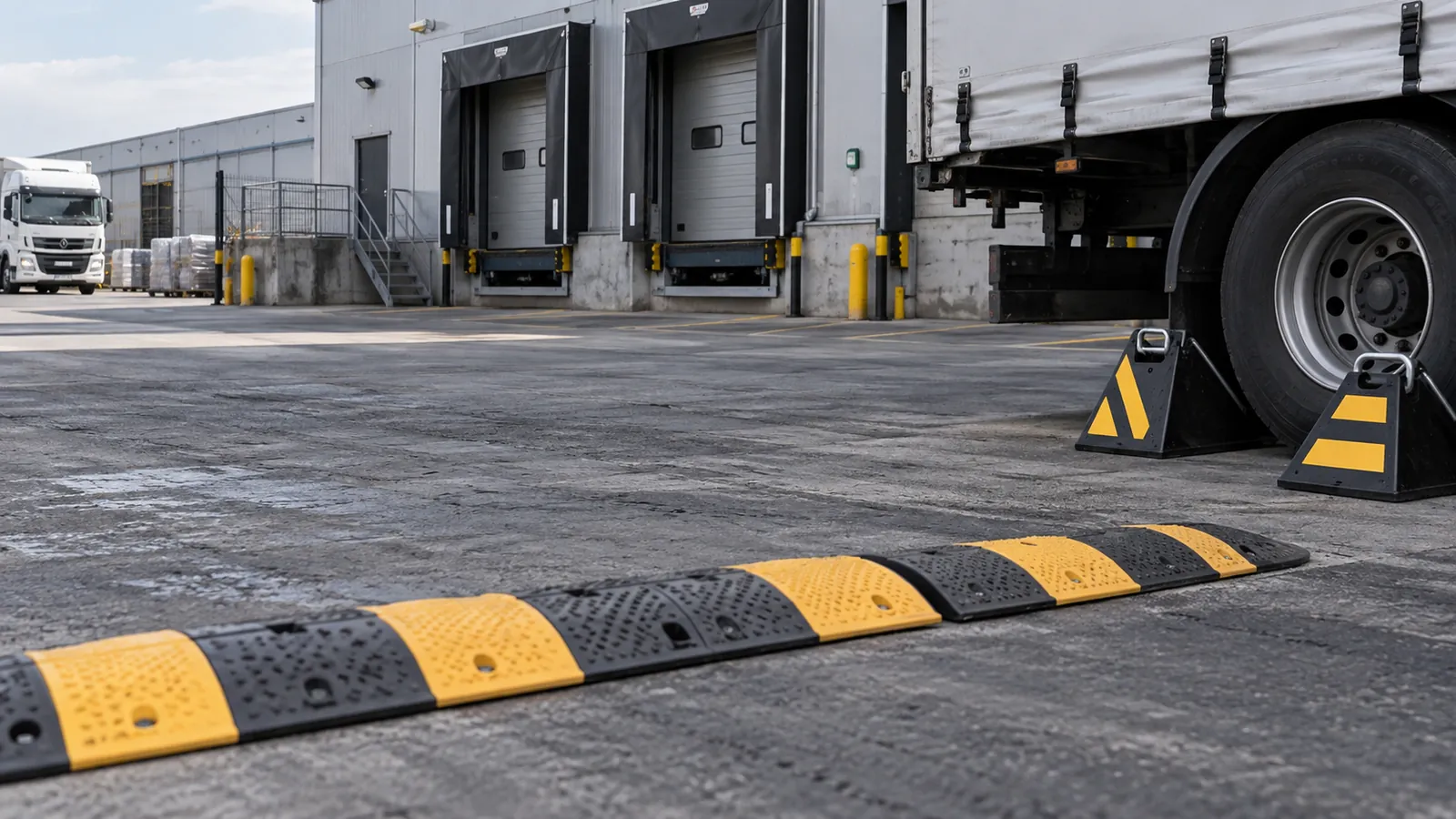
We can compare the appropriate family with each site position, so the first buying range follows how vehicles actually move and stop.
Speed Bumps Need a Roadway Specification
State lane width, surface, drainage, vehicle types and desired installation position. A durable phrase in the listing does not confirm suitability for every vehicle or road surface. Request the proposed unit dimensions and fixing requirements.
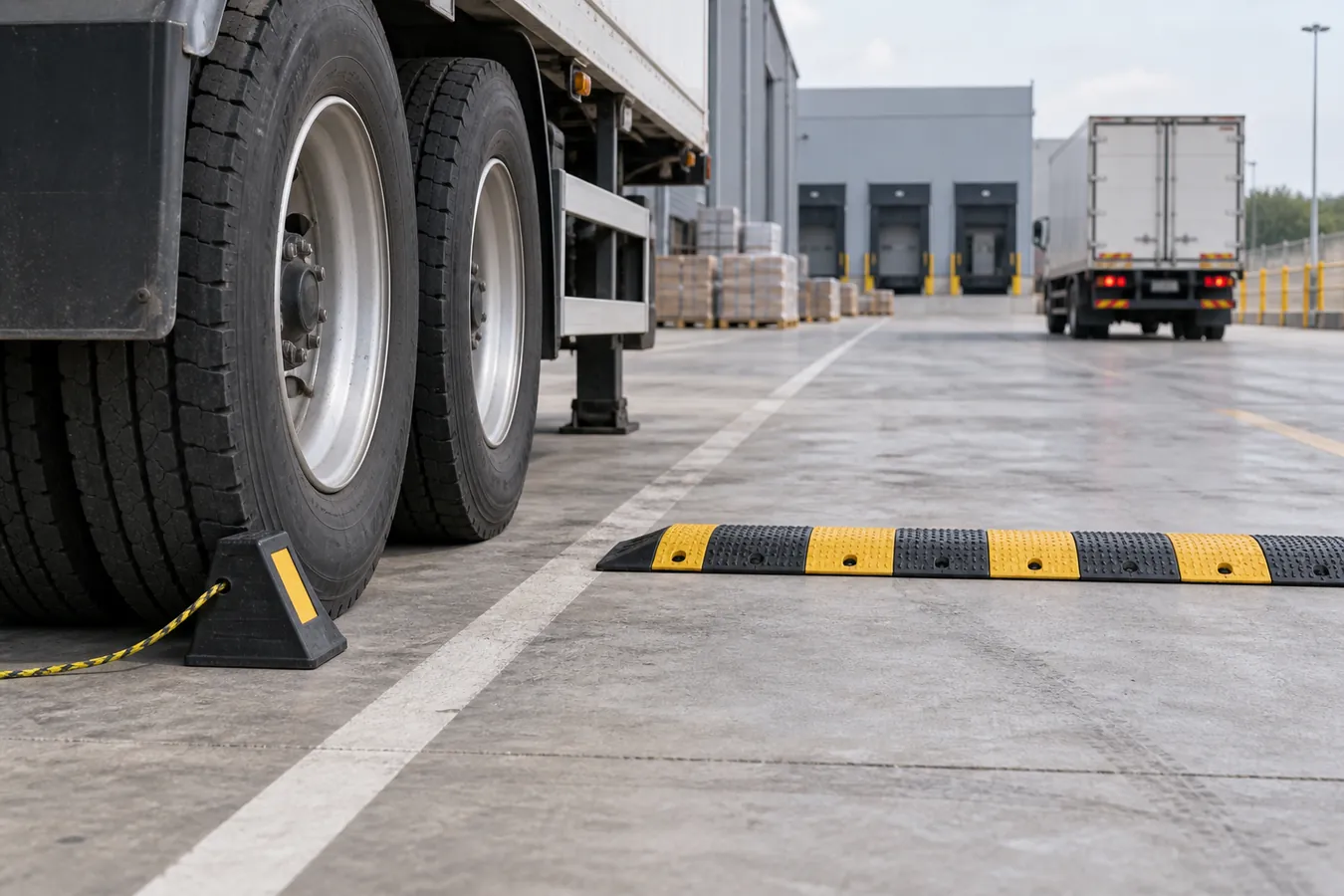
Wheel Chocks Need Vehicle and Wheel Data
Provide the vehicle types, tire sizes, parking conditions and how chocks will be stored or retrieved.
Placement Changes the Operational Benefit
An incorrectly placed bump may obstruct equipment, and a chock stored away from the wheel may be ignored. Share traffic paths and working routines so the proposed products fit your operations. The recommendation should follow real site behavior rather than catalog category names.
Materials and Fixings Need Readback
Confirm dimensions, supplied material, fixing method and any visibility requirements for the chosen configuration. Product photographs cannot settle those delivered details. Keep the selected item and its installation position together on the purchase record. If speed bumps need fixed installation, compare the fastener range only after the pavement and fixing method have been agreed for the site.
Site-Safety Products Follow the Actual Installation Plan
For your pipeline item, the actual position, dimensions, medium, pressure and connection details stay with the quoted configuration and inspection record.
Approve product dimensions, vehicle or wheel context, pavement, fixing method, quantity and placement plan. The factory specification and inspection scope are confirmed for the selected products.
RELIA manufactures rubber joints, metal bellows, industrial and dredging hoses, valves, pipe connections and repair products in its own factory. A pressure and leak test bench supports project inspection, and each line is approved against its own service conditions and test plan.
The selected pipeline item follows its approved dimensions, pressure basis, material and test plan through production and release.
Before release, match the actual line position, approved configuration, quotation and test record to the item you plan to install. Review the company profile or request the current ISO certificate copies.
Send the Traffic and Parking Layout
Send site drawings or photos, roadway widths, surface details, vehicle types, tire information, quantities and destination. Mark each speed-bump and chock position separately. Share these details with us for a two-family supply enquiry.