
Custom Knife Sections for Drawing-Based Combine Headers
RELIA develops custom knife sections around the knife back, guards and header motion, with drawing and sample approval before bulk production.
For a header maker seeking custom knife sections, we can review the cutterbar interfaces and section drawing together. Our product pages include combine knife sections and numbered replacement sections. Those listings are useful starting references. Your drawing and cutterbar fit check determine the section that moves into sampling.
This sourcing task starts with a new header design. Your drawing should define the section outline, knife-back hole datum and working clearance before any existing section is treated as a reference. We can compare our listed forms with that design and discuss a sample. We connect the approved section drawing, sample checks and defined production route before the part moves into bulk supply.
The Header Drawing Sets the Real Task
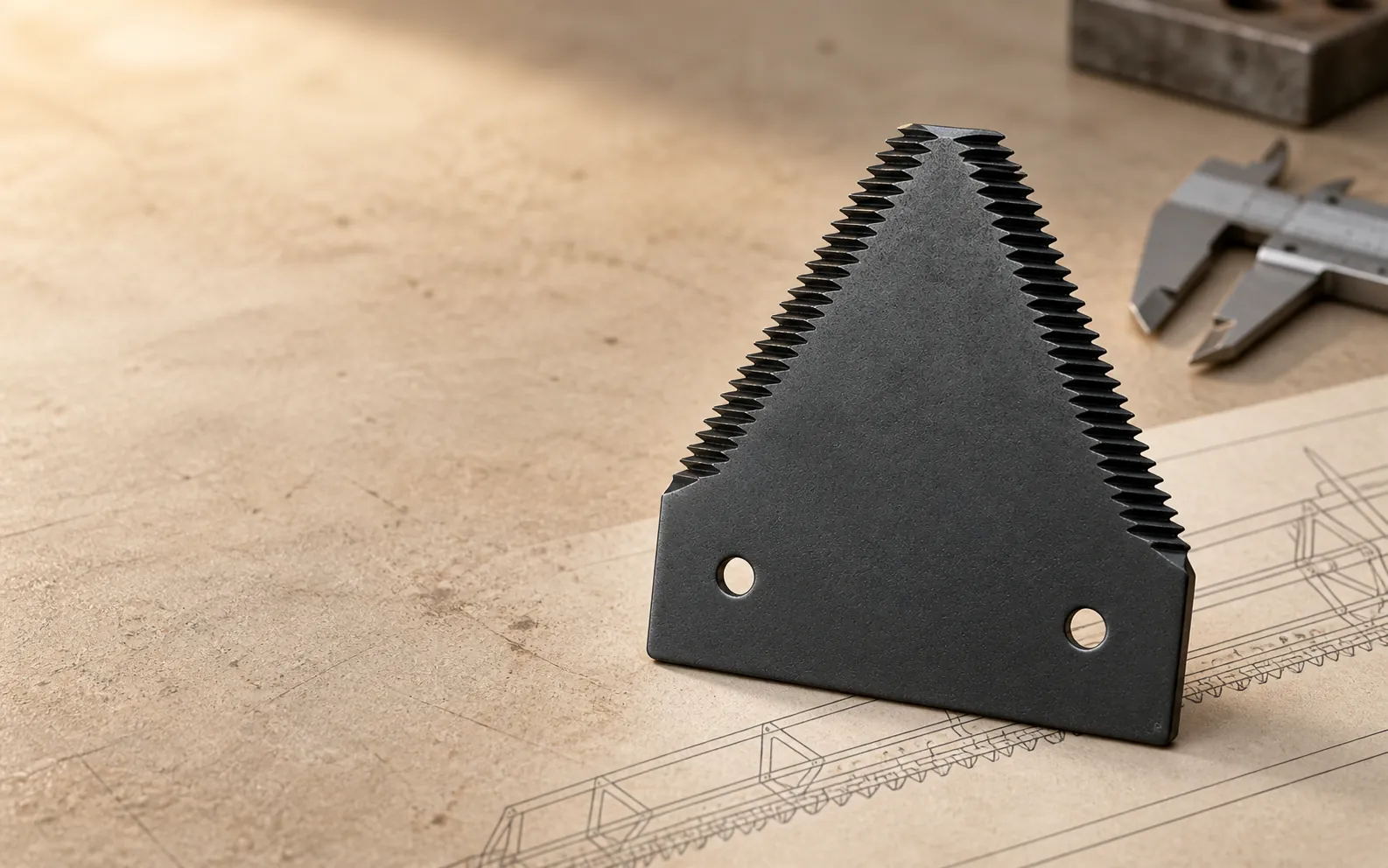
We should mark every difference from a listed form before discussing a new sample, so an existing part number does not quietly become the specification for your header.
Existing Sections Are Shape References
The catalog shows more than one section form. Compare an existing listing with your required outline, hole arrangement and cutting edge, then mark differences. A similar photograph can speed discussion, but it cannot approve a custom section. Compare the knife-section range with your drawing to see which listed form is closest; matching a photo alone is not a fit approval.
Hole Position Is a Fit Decision
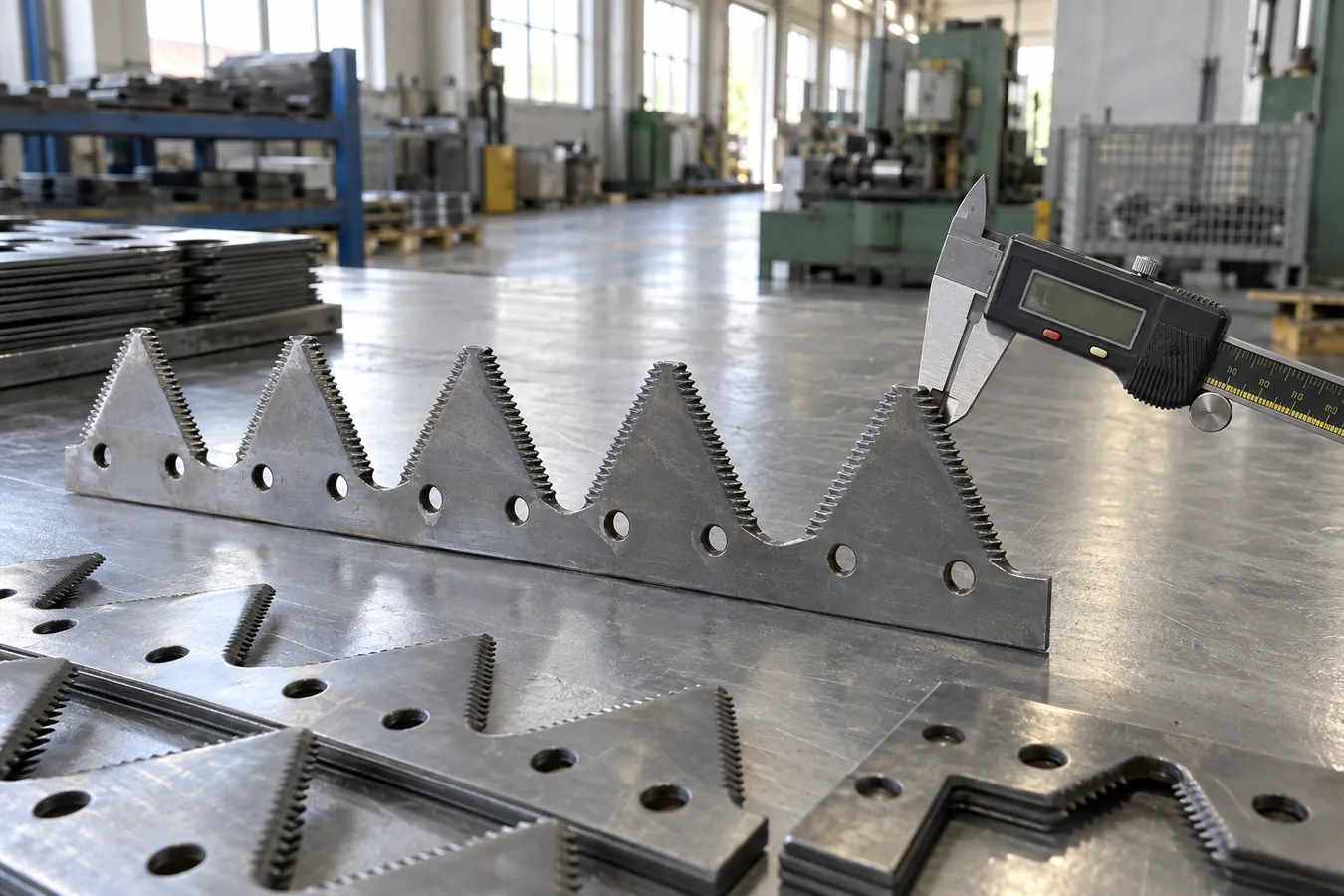
Section holes must agree with the knife back and fastening scheme. Name the datum and tolerances that control that relationship on your print.
If the drawing lacks a mating-part reference, provide a section of the assembly so the fit can be checked as a system. Our harvester dimensions guide identifies the fit information to retain.
Guard Clearance Needs Its Own Check
For a new header, clearance is a design acceptance point.
The New Section Needs Material and Edge Checks
State the material and any cutting, wear or heat-treatment requirements you intend to verify. Do not infer hardness or service life from a listing title. The selected production and inspection basis should be confirmed against your drawing before it becomes a purchasing promise. Use the harvester material and wear guide to describe the edge and wear requirements before accepting a cutting-part sample.
The Knife Section Moves from Header Fit to Repeat Supply
For your cutting part, we keep the machine reference, mating geometry, wear requirement and field-fit result connected from matching through repeat supply.
Approve the header reference, section drawing, hole position, material and edge requirements, sample fit and inspection points before bulk supply.
RELIA manufactures harvester cutting parts in its own factory. The range includes knife sections, guards, chopper blades and knife bars, with more than 300 compatible SKUs, 50–100 common SKUs available for quick supply and 800,000–1,200,000 knife-type pieces of monthly capacity.
Real order RL-HK-2401: a Canadian agricultural dealer approved a 65Mn knife section at HRC 48–55 after hole spacing, dimensions, hardness, surface condition and field fit were checked. In 2024, 500 samples were completed in 20 days before annual purchasing and 500,000–1,000,000-piece monthly planning.
Before release, keep the machine or part reference, sample result, quotation and inspection record together so the cutting part remains traceable. Review the company profile or request the current ISO certificate copies.
A Sample Should Run in the Intended Header
Check a proposed sample against the knife back and guards, then observe the actual motion and fastening position. Record any change as a drawing revision. A trial section should answer the header-fit question rather than only match a catalog photo.
Bulk Supply Depends on the Approved Reference
Quantity, timing and repeat-order control cannot be promised before the drawing and sample basis are agreed. For recurring header production, identify how the accepted revision will be referenced on subsequent orders. That prevents an old outline from returning unnoticed.
Send the Header and Section Prints
Send the approved section drawing, mating guard and knife-back references, projected volume and intended machine program. Mark the dimensions that govern fit and the checks your team will make on a sample. Share these details with us for a defined part enquiry.