
Replacement Cutting-Part Search Without an OEM Number
RELIA can identify an unnumbered cutting part from measurements, mating parts and a physical reference before sampling a replacement.
If a cutting part has no readable number, we can investigate candidates from the machine variant, photographs and dimensions. The catalog offers knife-section examples, guard examples and chopper blades. A replacement match is possible to investigate, not guaranteed from photos alone.
We can begin with an existing-part search instead of assuming your missing number means a custom job. Assembly location, machine variant and measurements from intact features will narrow the product family. A sample trial can then test the remaining candidates.
First Identify the Cutting Assembly
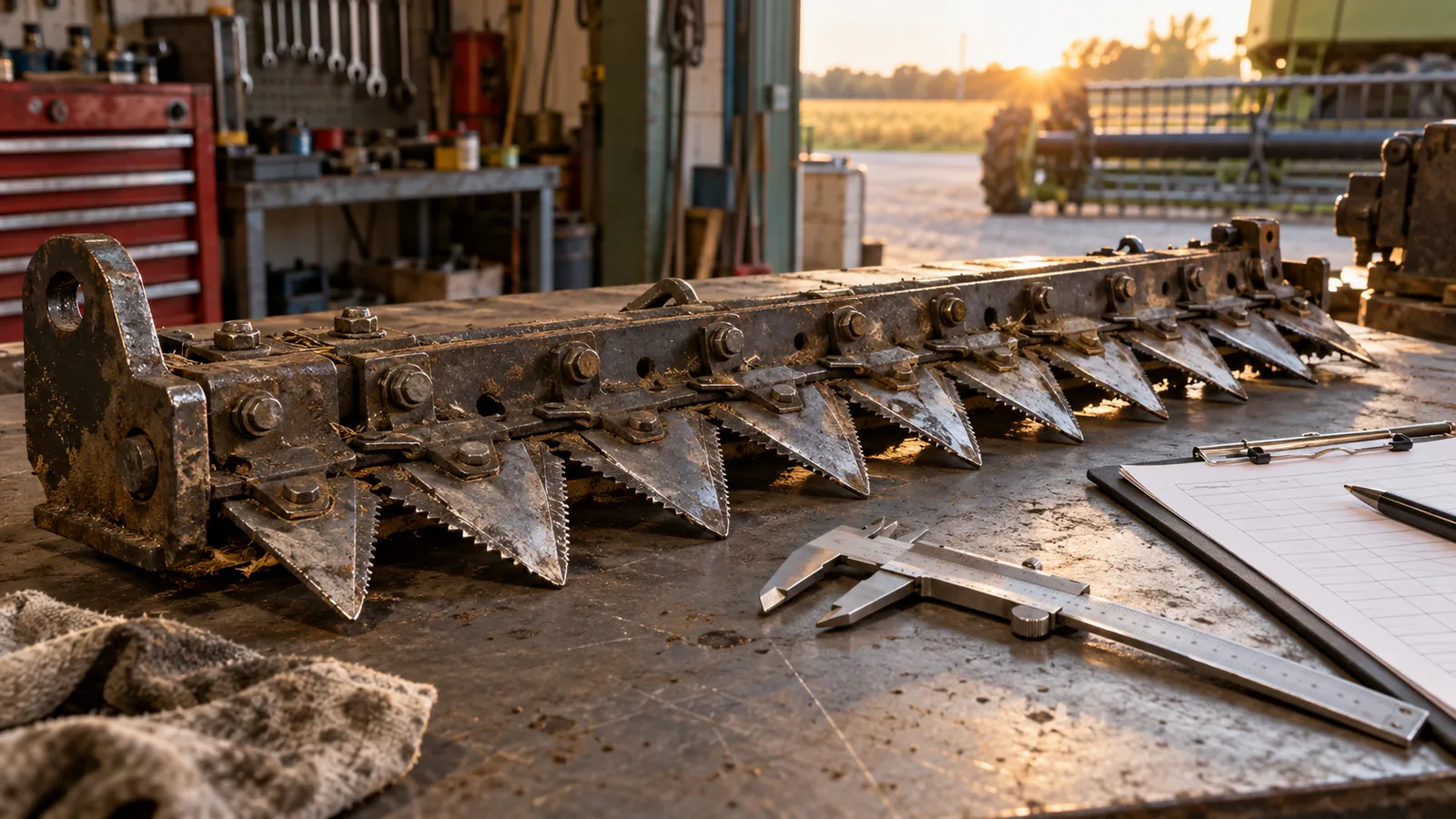
A photo of the part before removal lets us search the right family first. We can then compare mounting shape and machine details rather than send you a broad catalog with unrelated cutting parts.
Machine Details Narrow the Search
Provide combine model, header or chopper variant and any readable marks on adjacent components. The same machine family may use different assemblies.
A partial reference can still help when it is tied to a clear photograph and measured part. Our cutting-part identification guide gives you a structured way to collect those clues.
Measure Unworn Features First
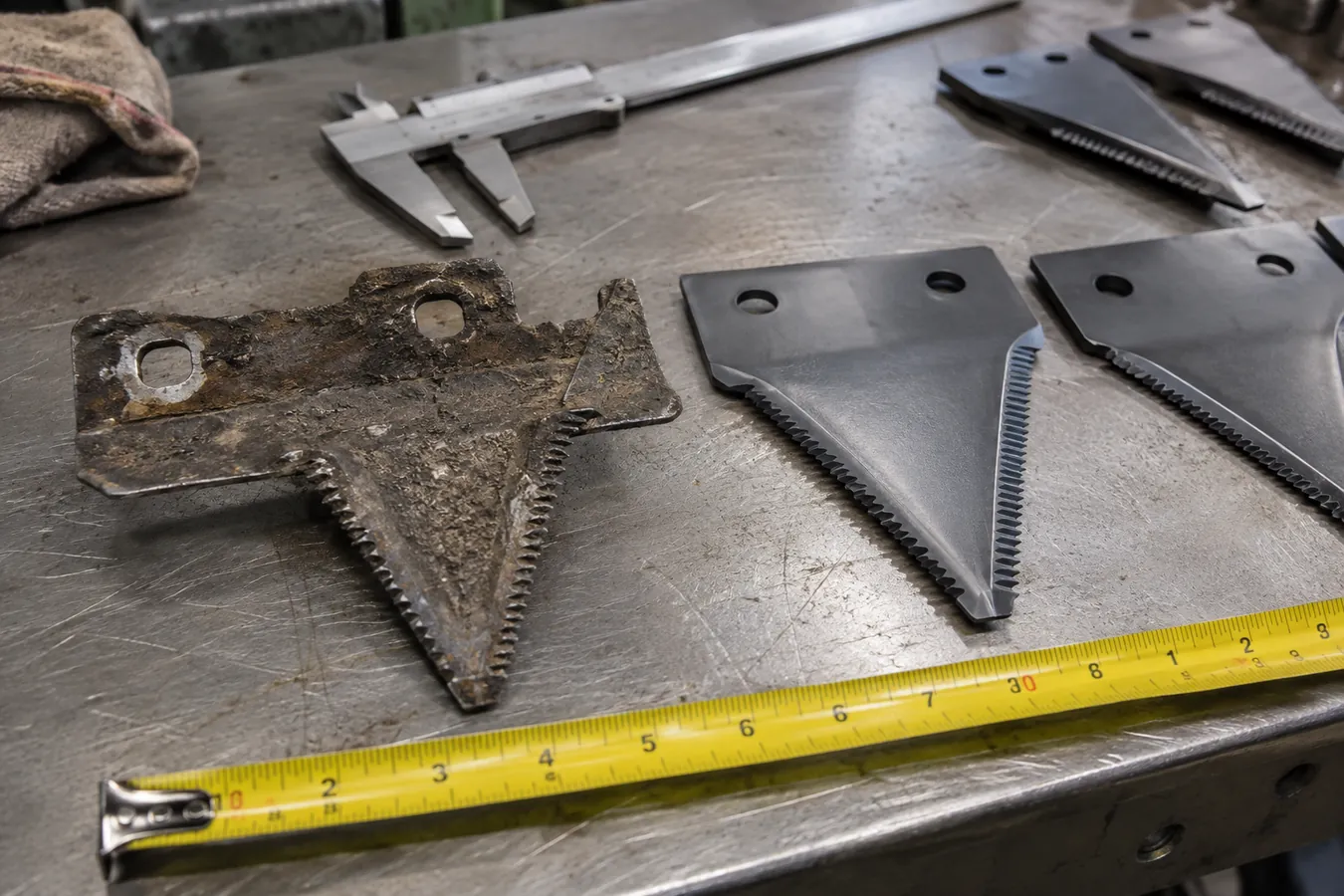
Record mounting holes, spacing, thickness, profile and orientation where the old part remains intact. A worn edge or bent finger can misrepresent the original geometry. Mark uncertain dimensions rather than present them as an approved drawing. Use the harvester dimensions and fit guide to organize old-part measurements and mating dimensions when the OEM number is missing.
Shape and Mounting Narrow the Cutting-Part Shortlist
Choose a few listings with plausible shapes, then compare their technical features one by one. A title or similar photograph is only a search clue.
Adjacent Parts Can Expose a Wrong Match
A knife section should be assessed with its guard and knife back. A chopper blade with its rotor mount. Send an adjacent part or assembly photo where possible. That context can reveal an interface a loose old part does not show.
Catalog Matching Comes Before Reproduction
If no fit can be established, we can review a measured drawing and sample-based feasibility as a separate route. This sequence can save your repair team from commissioning new tooling for a part that already has a usable match.
The Selected Part Needs an Assembly Trial
If a shortlist survives measurement, test an appropriate sample in the intended assembly. Keep the observations and accepted reference on your repair record. A product that installs but binds during operation should not be promoted as a replacement.
A Missing OEM Number Is Replaced with Measured Fit Details
For your cutting part, we keep the machine reference, mating geometry, wear requirement and field-fit result connected from matching through repeat supply.
A visual match is only a starting point. Approval needs machine context, measurements from unworn features, adjacent-part checks, a controlled candidate and an assembly trial.
RELIA manufactures harvester cutting parts in its own factory. The range includes knife sections, guards, chopper blades and knife bars, with more than 300 compatible SKUs, 50–100 common SKUs available for quick supply and 800,000–1,200,000 knife-type pieces of monthly capacity.
The approved part reference controls production, and fit, dimensions, material and hardness checks follow the selected cutting part.
Before release, keep the machine or part reference, sample result, quotation and inspection record together so the cutting part remains traceable. Review the company profile or request the current ISO certificate copies.
Common Ordering Clarifications
These practical points keep identification, sampling and repeat supply connected to the part you approve.
The missing number can be replaced with a fit record
Clear photos, key dimensions, mounting position and mating-part details create a usable reference for candidate matching.
The old part should be measured at unworn features
Worn edges and elongated holes can mislead the replacement. We base the review on stable datums and assembly context.
A candidate still needs an assembly trial
Measurements narrow the shortlist, while an installed sample confirms the working fit before repeat supply.
Send Photos and Measurements Together
Send the machine and assembly details, old part views, measured intact features, adjacent-part images and required quantity. Mark what remains unknown. Share these details with us so we can narrow the enquiry without inventing an OEM cross-reference.