
Knife Sections and Guards for Harvest-Season Wholesale Orders
RELIA can prepare knife-section and guard assortments for harvest-season demand when every SKU is tied to a machine or part reference.
If your dealers need knife sections and guards on the shelf before harvest, you can include us in your Chinese supplier review using your established part numbers and buying window. Our knife-section and guard ranges provide candidate forms; we can compare those forms with your machine and header references, then discuss the quantities and arrival requirements for the lines that survive fit review.
We would begin with the parts your dealers already sell, divide the list into release-ready references and fit-review items, and check the required arrival window for each. This gives you a practical basis for a seasonal supplier review. We confirm current availability, production and inspection scope, and the planned date for every item before you publish it as dealer stock.
Prioritize Parts from Dealer Orders and Returns
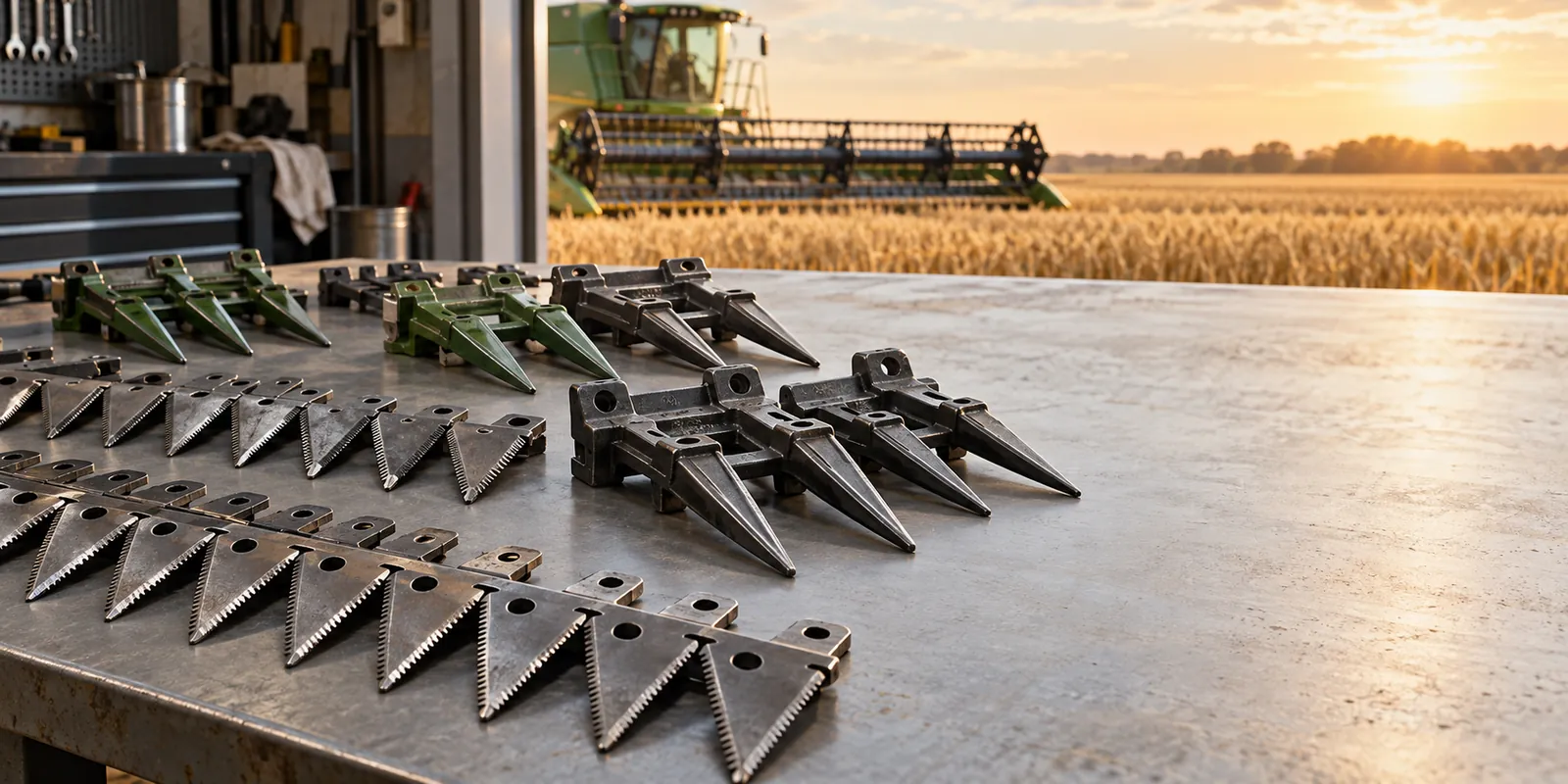
Your past orders and returns show which part numbers deserve buying attention before harvest. A fast-moving knife section, a guard that dealers repeatedly ask for and an item with frequent wrong-part returns are different priorities. We can compare those named references with our published range; your demand record then determines the likely first-order quantity and which uncertain item needs a trial rather than a large initial buy. This keeps the pre-season budget tied to actual dealer need.
Our wider harvester cutting-parts range can suggest adjacent forms. Your own sales and service records decide whether those forms deserve a first sample, a confirmed stocking line or no purchase yet.
Check Header Coverage Before Extending the Range
High demand for one combine brand does not mean a single knife section or guard covers all of its header systems. For a candidate from our range, we would place the priority reference under the actual machine, header and position your dealers service, then review geometry for that application. A visually similar part with a different hole pattern or mating arrangement should remain outside the approved stocking line until the reference is checked. That stops a growing catalog range from becoming wrong inventory.
Each candidate still needs its machine, header, position and mating reference. Our part identification guide helps where a dealer's number is incomplete. A machine brand in a listing cannot approve fit across all cutterbars under that brand.
Separate Approved Stock Lines from Trial Items
Your ordering sheet should distinguish three states: a part already approved for your customers, a catalog candidate being compared, and a new reference that still needs a sample or measurement. We can mark that status beside each proposed item from our range. Only approved lines with agreed order conditions belong in the pre-season release list; an attractive product photograph cannot settle fit or availability for a particular cutterbar.
For a genuinely new blade geometry or mounting pattern, our custom knife-section guide covers the development path. Custom design is a separate decision from replenishing the parts your dealers already recognize.
Plan Volume and Dates by Part Number
Pre-season buying is a schedule, not one total quantity. Show the first quantity, likely follow-on quantity and required arrival window for every priority SKU. We can discuss the candidate and order conditions on the same line, so an early dealer requirement does not disappear inside the volume total. If a part still needs a sample or separate production step, keep its timing outside the release list until that step is defined.
Our published product pages do not establish a seasonal stock reserve, an identical minimum order or one delivery date across knife sections and guards. Confirm the quantity, timing and starting point for each selected part in the item-specific supply response before you promise an arrival window to dealers.
Recheck Late Dealer Demand Against the Approved List
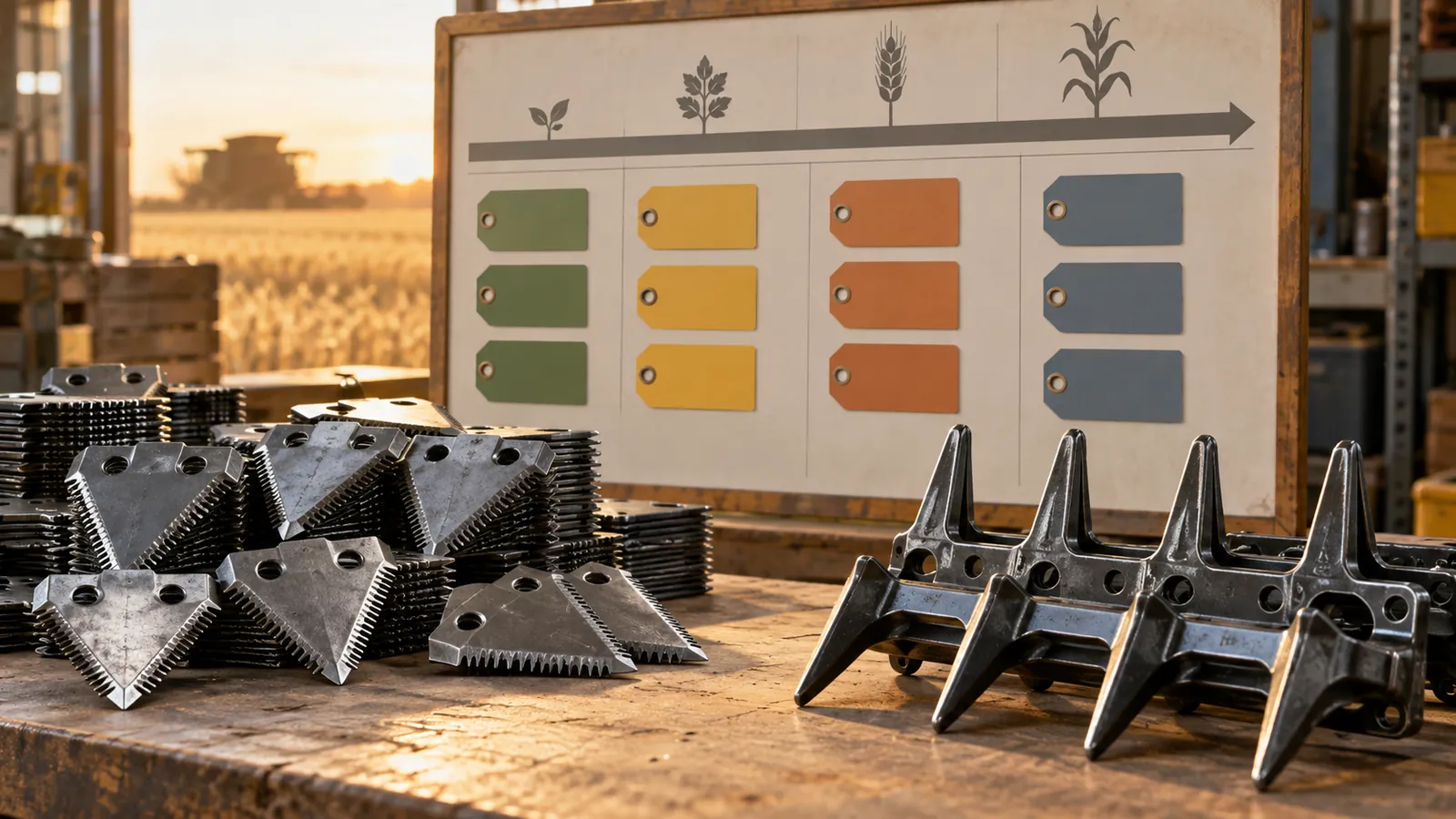
After the first seasonal order is planned, dealers may ask for another size, a different header or an earlier arrival. Treat that as a new line rather than quietly raising the volume of a similar part. We can compare the late request with the approved reference list and discuss whether it is an existing buy line, a fit-review item or a separate enquiry. That protects the planned order from an unapproved substitution.
The dealer-facing stock claim should change only after fit, quantity and arrival terms for that new line have been confirmed. General bulk cutting-parts guidance covers inspection and packing; this seasonal decision is about whether the late request can join a dated purchase commitment.
The Seasonal SKU List Balances Fit, Volume and Timing
For your cutting part, we keep the machine reference, mating geometry, wear requirement and field-fit result connected from matching through repeat supply.
Each seasonal line needs a machine or part reference, fit basis, approved candidate, source, pack identity, volume and delivery date. Trial items remain separate from approved stock lines.
RELIA manufactures harvester cutting parts in its own factory. The range includes knife sections, guards, chopper blades and knife bars, with more than 300 compatible SKUs, 50–100 common SKUs available for quick supply and 800,000–1,200,000 knife-type pieces of monthly capacity.
Knife-type parts have a confirmed production capacity of 800,000–1,200,000 pieces per month. The current range includes more than 300 compatible SKUs, with 50–100 common SKUs available for quick supply.
Before release, keep the machine or part reference, sample result, quotation and inspection record together so the cutting part remains traceable. Review the company profile or request the current ISO certificate copies.
Seasonal Stock Ordering Details
These ordering details help your warehouse and purchasing teams preserve the approved item on every reorder.
Seasonal volume is planned by part number
Fast-moving knife sections and guards receive their own quantities and required dates instead of one combined seasonal total.
Trial items remain outside approved stock lines
A new cross-reference stays visibly separate until fit and field use are accepted for the named machine or header.
Packing supports dealer identification
Labels and inner packs retain the approved part reference so warehouse staff and dealers can distinguish similar cutting parts.
Send the Seasonal SKU Schedule
When you send the machine and header references, current part numbers, approved samples or drawings, quantities, arrival windows, destination and packing identities together, we can keep each decision tied to the correct seasonal SKU. Mark the lines that are already saleable in your range and the ones still under review. We can return a shortlist separated into release candidates, fit-review items and timing questions. That lets your team plan shelf space without putting every catalog candidate into one seasonal purchase.
Send your seasonal parts schedule, email the list or share it on WhatsApp. The next response should refer to your named SKUs and open conditions, not to harvest season in general.