
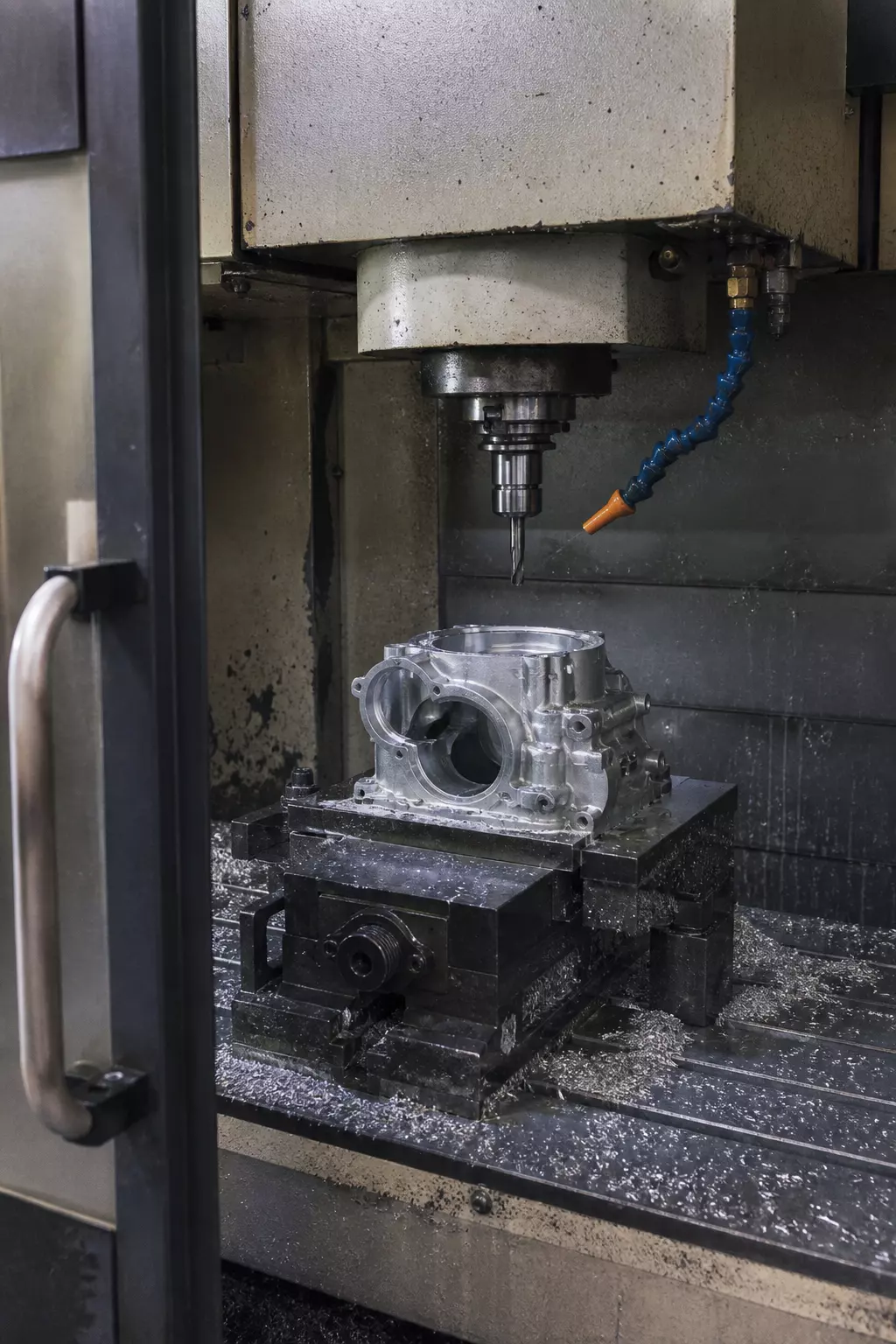
Pump Mount and Rubber Pipe Joint Candidates for Pump Stations
RELIA reviews pump mounts and flexible pipe joints as one station system, with equipment and pipeline interfaces defined separately.
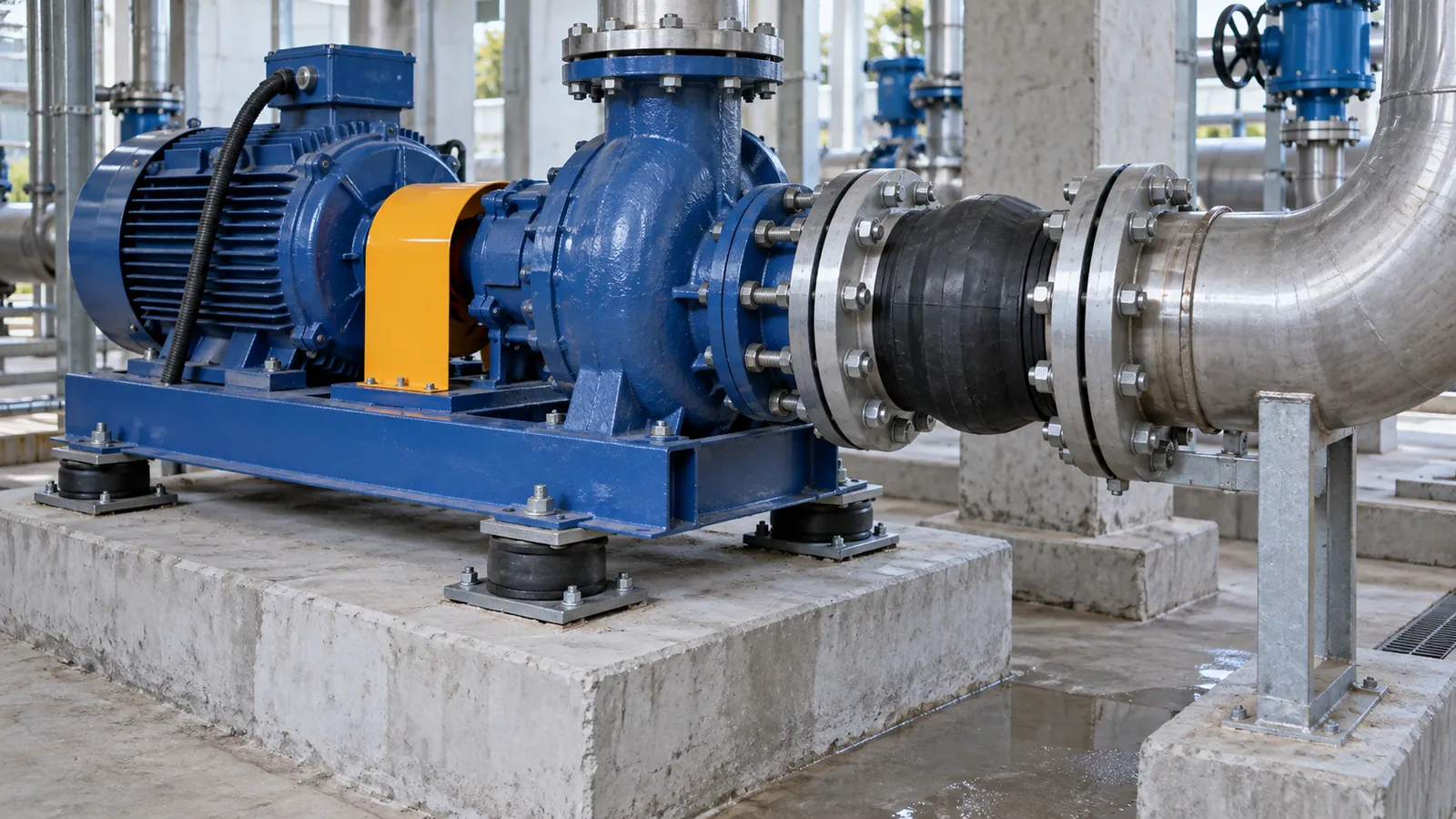
For pump stations, we can review equipment mounts and piping joints as two separately specified components. Our product pages include pump spring-mount examples and flanged rubber-joint examples. These are two different components. Neither can be selected without the pump, pipe and site design conditions.
We can keep the equipment and piping decisions connected without treating them as one product choice. A pump mount is reviewed against support loads. A rubber joint is reviewed against pipe movement, medium and restraint. Your station drawings determine whether both belong in the package.
Locate the Problem Before Buying Two Parts
Your project may need one, both or another engineering measure. Separating the two paths gives your engineer a clearer trial and installation plan before either item is chosen.
Pump Mounts Begin with Supported Load
Provide operating weight, mount count, support locations and operating speed. The linked pump mount is a catalog example, not a verified size for your equipment. A proposal should be checked against the actual loads and foundation arrangement. Compare the rubber mount range by the pump load and fixing layout, before connecting a mount choice to any pipe-joint decision.
Equipment Fixings Must Remain Compatible
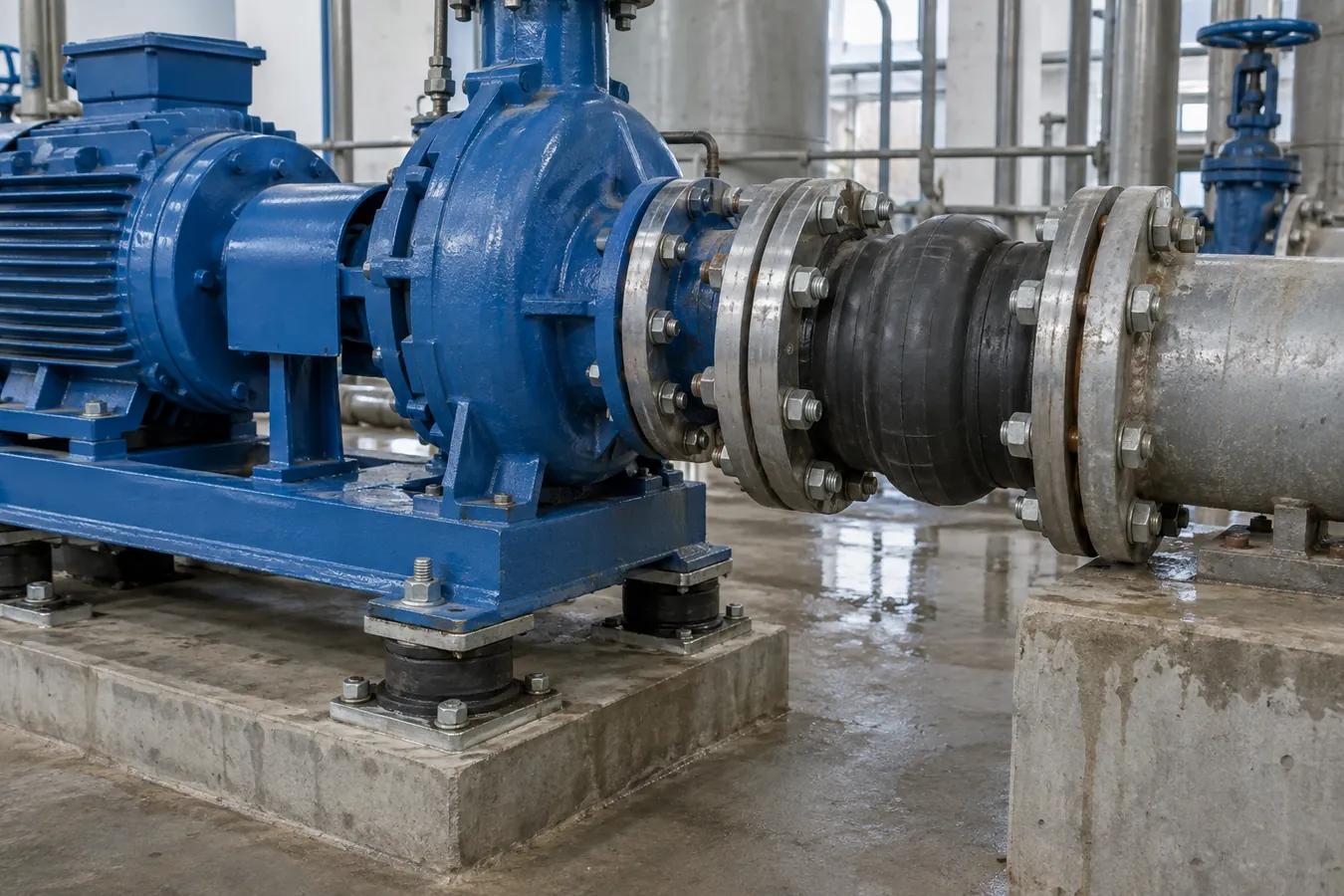
Share pump-skid holes, base dimensions and installation height constraints. A mount can appear suitable for vibration control and still conflict with anchors or maintenance clearance. Confirm its interface before treating it as a project part.
Pipe Joints Begin with System Conditions
Provide pipe size, flange standard, pressure, temperature, medium and expected movement. The linked double-sphere EPDM product title cannot approve the joint for your complete operating range.
Flange and Face-to-Face Details Matter
Measure connection faces, drilling, available installation length and neighboring support positions. A nominal DN alone does not settle the interface. If a rubber joint is proposed, check its delivered dimensions against the installed pipework.
Anchors and Supports Remain a System Decision
A flexible joint should not be treated as a substitute for proper pipe restraint or as a correction for every alignment error.
Share the anchor, guide and pump-nozzle arrangement for engineering review. Our pipeline connector guide explains the surrounding checks. The joint's safe use depends on the system.
Pump Support and Pipe Joint Need Separate Specifications
Technical data for the spring mount and rubber joint should be requested independently. One catalog category cannot prove the behavior of the other. Keep each proposed part's configuration, limits and supplier role visible on the project list.
Pump Mounts and Pipe Joints Stay Clear in One Package
For a pump package, mounts and pipe joints are reviewed together at system level while each component keeps its own specification and test basis.
Approve the mount and pipe joint against separate specifications, evidence and installation checks. The package quotation should show the responsible source and delivery line for each component.
RELIA manufactures pump mounts and rubber pipe joints in its own factory. Each component is specified and inspected separately before the combined package is released.
The mount and pipe joint are produced and inspected to their separate approved specifications before package release.
Before release, keep the mount and pipe-joint specifications separate inside one package schedule. Review the company profile or request the current ISO certificate copies.
Installation Checks Can Expose Interaction
After a project proposal is defined, check the mount's position and the joint's pipe alignment on site. Movement at the pump can affect a nearby connection. Capture the actual installation conditions instead of relying only on loose-product photographs.
Timing Depends on Two Configurations
Send the Pump and Piping Package
Send pump model, operating weight, mount layout, speed, pipe drawings, flange details, medium, pressure, temperature and site destination. Identify the observed problem and required quantity of each component. Share these details with us for two connected but distinct product reviews.