

Return to Fastener Coatings and Finishes
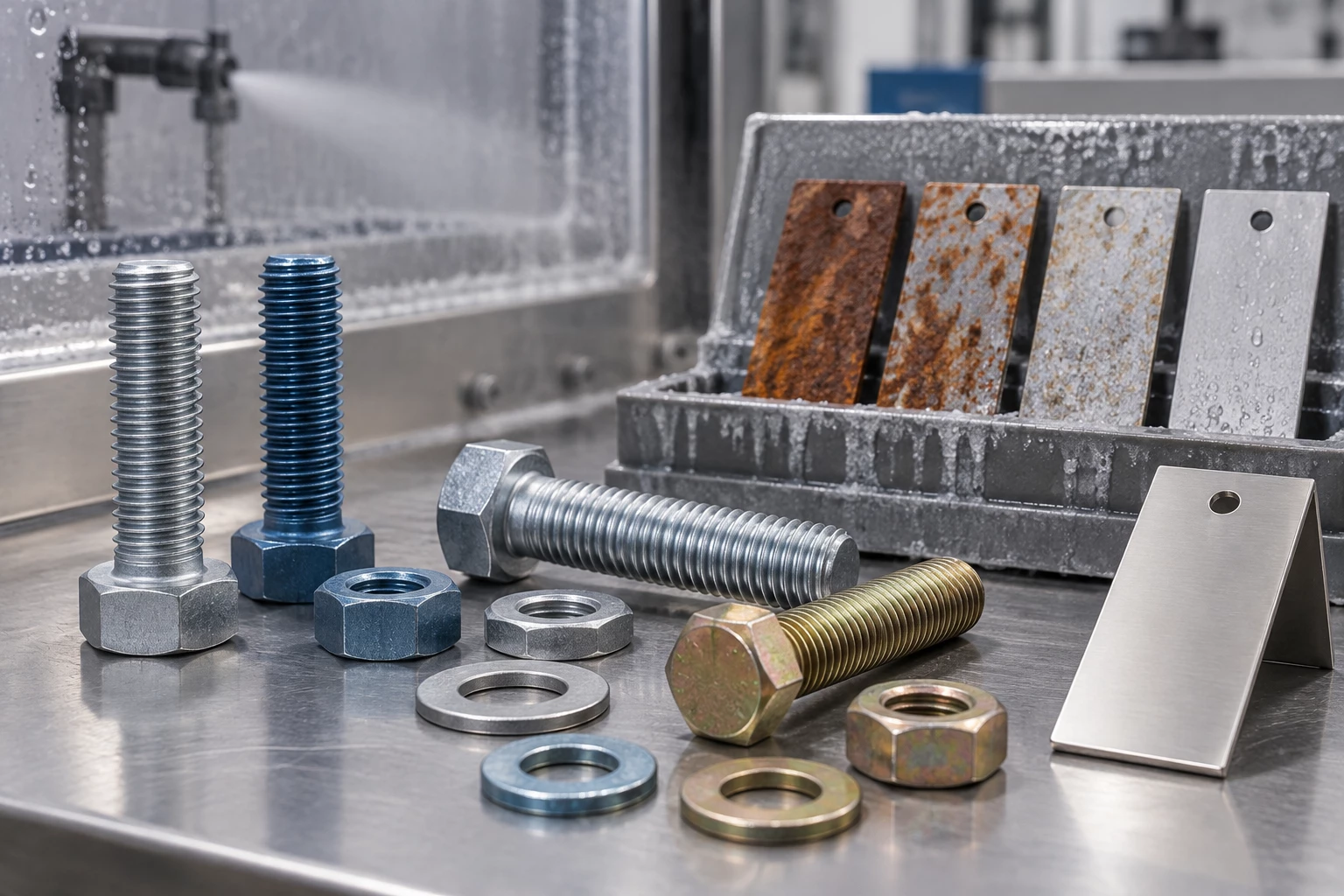
A coating decision combines corrosion exposure, base material, strength level, thread fit, assembly and verification. A finish name or color alone does not define service performance.
Describe the exposure before choosing a finish
For choosing fastener coatings for corrosive environments, record each input with its unit, source and current status. Known values can be used immediately; unknown values should remain visible for confirmation instead of becoming silent quotation or production assumptions.
Balance corrosion protection with fit and base material
Separate decorative appearance from corrosion function
Record the exact medium, concentration, contaminants, cleaning exposure and temperature. Review compatibility for the complete duty; a generic material family or color does not confirm long-term suitability. For this check, connect “Separate decorative appearance from corrosion function” to base material and strength level.
Review hydrogen-embrittlement controls where relevant
For fastener coatings and finishes, connect this check to a drawing, measurement, photograph or acceptance note. Mark the remaining decision as open instead of allowing it to become an unstated quotation assumption. For this check, connect “Review hydrogen-embrittlement controls where relevant” to service environment.
Inspect threads in the finished condition
Define exposure, base material, finish process, thickness or accelerated-test requirement and final fit. Corrosion protection, appearance, thread allowance and hydrogen risk must be reviewed together. For this check, connect “Inspect threads in the finished condition” to finish specification.
Use corrosion tests only within their stated method and limits
Record the exact medium, concentration, contaminants, cleaning exposure and temperature. Review compatibility for the complete duty; a generic material family or color does not confirm long-term suitability. For this check, connect “Use corrosion tests only within their stated method and limits” to thickness or test requirement.
Coating labels that do not define performance
- Comparing finishes only by salt-spray hours. Specify the exposure and finished-fit requirement, then state the coating method, thickness or test criterion. A finish name or test duration alone does not predict real service life. Record the correction point against base material and strength level.
- Adding coating thickness without checking thread allowance. Specify the exposure and finished-fit requirement, then state the coating method, thickness or test criterion. A finish name or test duration alone does not predict real service life. Record the correction point against service environment.
- Changing process on high-strength parts without risk review. Replace the shortcut with a visible assumption register for fastener coatings and finishes. Confirm the unknown through the buyer, drawing, sample or agreed inspection method before release. Record the correction point against finish specification.
Specify the finished and inspected condition
Define the environment.
Start with base material and strength level and service environment. Include the governing drawing, sample, equipment reference or application context that explains where the information came from.
Confirm base material and strength level.
Separate confirmed values from open items, especially finish specification and thickness or test requirement. This allows an early review without turning missing information into guessed requirements.
Select a coating process and thickness range.
Compare the route against corrosion environment and exposure duration and coating type and thickness. Record why one option is being advanced and what evidence is still needed.
Agree finished-part inspection and documentation.
Carry the same approved fastener coatings and finishes revision, assumptions and acceptance criteria into quotation, sample review, production, inspection, packing and repeat orders.
RELIA can review the available information for choosing fastener coatings for corrosive environments, identify open items, and compare stock matching with custom production. Final product configuration and acceptance remain tied to the approved project information.
Send the current information for a project-specific review
You do not need to guess missing values before making contact about choosing fastener coatings for corrosive environments. Send the confirmed information and mark the remaining decisions for discussion.
