

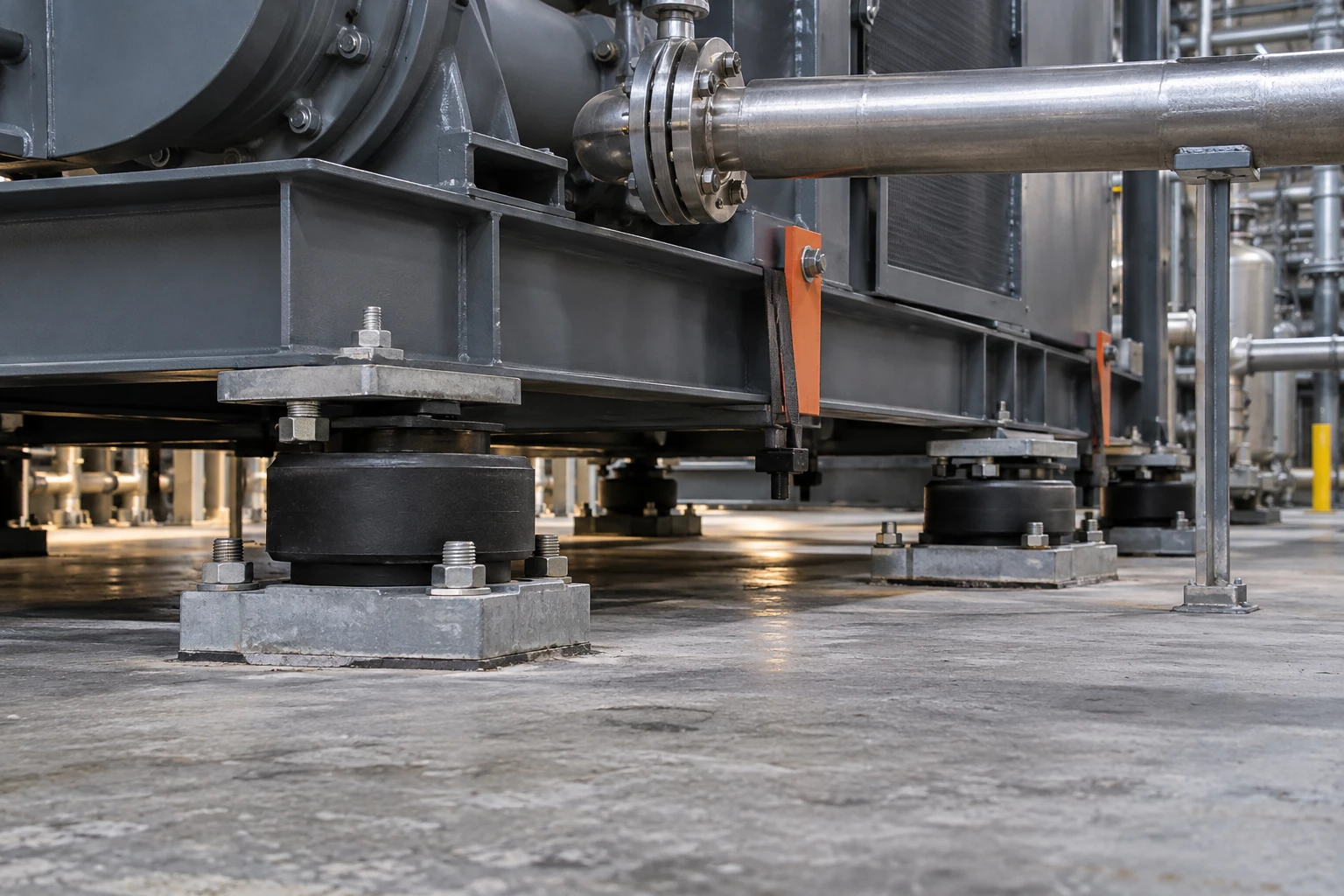
Return to Vibration Isolator Installation and Troubleshooting
When vibration remains after installation, the isolator may not be the root cause. Rigid bypasses, uneven loading, shipping restraints, insufficient clearance, imbalance and structural response must be separated.
Capture every mount in the same operating state
For common vibration isolator installation problems, record each input with its unit, source and current status. Known values can be used immediately; unknown values should remain visible for confirmation instead of becoming silent quotation or production assumptions.
Inspect rigid bypasses, restraints and clearances
Remove or set shipping restraints as specified
Show where forces and movement enter the surrounding system. A connector or isolator cannot be reviewed independently when anchors, guides, supports or rigid services control its real behavior. For this check, connect “Remove or set shipping restraints as specified” to photos of every mount.
Verify flexible connections are actually flexible in service
For vibration isolator installation and troubleshooting, connect this check to a drawing, measurement, photograph or acceptance note. Mark the remaining decision as open instead of allowing it to become an unstated quotation assumption. For this check, connect “Verify flexible connections are actually flexible in service” to measured compression/height.
Check for bottoming, coil contact or side rubbing
For vibration isolator installation and troubleshooting, connect this check to a drawing, measurement, photograph or acceptance note. Mark the remaining decision as open instead of allowing it to become an unstated quotation assumption. For this check, connect “Check for bottoming, coil contact or side rubbing” to equipment state when vibration occurs.
Inspect looseness, imbalance and alignment separately
Compare the pattern across adjacent cutting components. Sections, guards, ledgers, hold-downs, register and knife-back alignment form one shearing system; replacing the newest visible wear point may not correct the cause. For this check, connect “Inspect looseness, imbalance and alignment separately” to connected piping/ducting.
Installation assumptions that mislead troubleshooting
- Correcting vibration by tightening restraints until movement stops. Preserve the installed evidence first. Check alignment, mating faces, support and even loading before applying more bolt force as a universal corrective action. Record the correction point against photos of every mount.
- Leaving a rigid pipe or conduit across the isolation boundary. Replace the shortcut with a visible assumption register for vibration isolator installation and troubleshooting. Confirm the unknown through the buyer, drawing, sample or agreed inspection method before release. Record the correction point against measured compression/height.
- Assuming equal compression without checking point loads. Obtain point loads or the best available load distribution from the equipment geometry and center of gravity. Keep uncertainty visible when a precise calculation is not yet available. Record the correction point against equipment state when vibration occurs.
Separate the mount from the source and structure
Observe the symptom by operating state.
Start with photos of every mount and measured compression/height. Include the governing drawing, sample, equipment reference or application context that explains where the information came from.
Inspect every possible rigid path.
Separate confirmed values from open items, especially equipment state when vibration occurs and connected piping/ducting. This allows an early review without turning missing information into guessed requirements.
Measure mount condition and clearances.
Compare the route against uneven compression indicates load or leveling issues and rigid services can short-circuit isolation. Record why one option is being advanced and what evidence is still needed.
Escalate structural or machine faults to the responsible engineer.
Carry the same approved vibration isolator installation and troubleshooting revision, assumptions and acceptance criteria into quotation, sample review, production, inspection, packing and repeat orders.
RELIA can review the available information for common vibration isolator installation problems, identify open items, and compare stock matching with custom production. Final product configuration and acceptance remain tied to the approved project information.
Send the current information for a project-specific review
You do not need to guess missing values before making contact about common vibration isolator installation problems. Send the confirmed information and mark the remaining decisions for discussion.
