

Pipe Reducers with Defined End and Wall Requirements
Your reducer order becomes clearer when each end has its own definition. We review the large end, small end and transition against the approved drawing, keeping material and wall requirements attached to the same purchase line. That gives your fabricator a practical basis for fit-up and receipt.
Manufacturing enquiries with our team in ChinaSend your project details
Give each pipe end its own record
Write the large-end and small-end outside diameter, wall and preparation separately. We retain those two definitions through clarification and quotation. This keeps a single nominal size or wall label from concealing a different requirement at the other end.
- Large endDiameter, wall and preparation
- Small endDiameter, wall and preparation
- TransitionApproved connecting geometry
The transition follows the approved drawing
A concentric or eccentric description still leaves dimensional work to do. Overall length, offset and end directions need a clear reference. We review the actual geometry you require, keeping system design decisions separate from the definition of the supplied fitting.
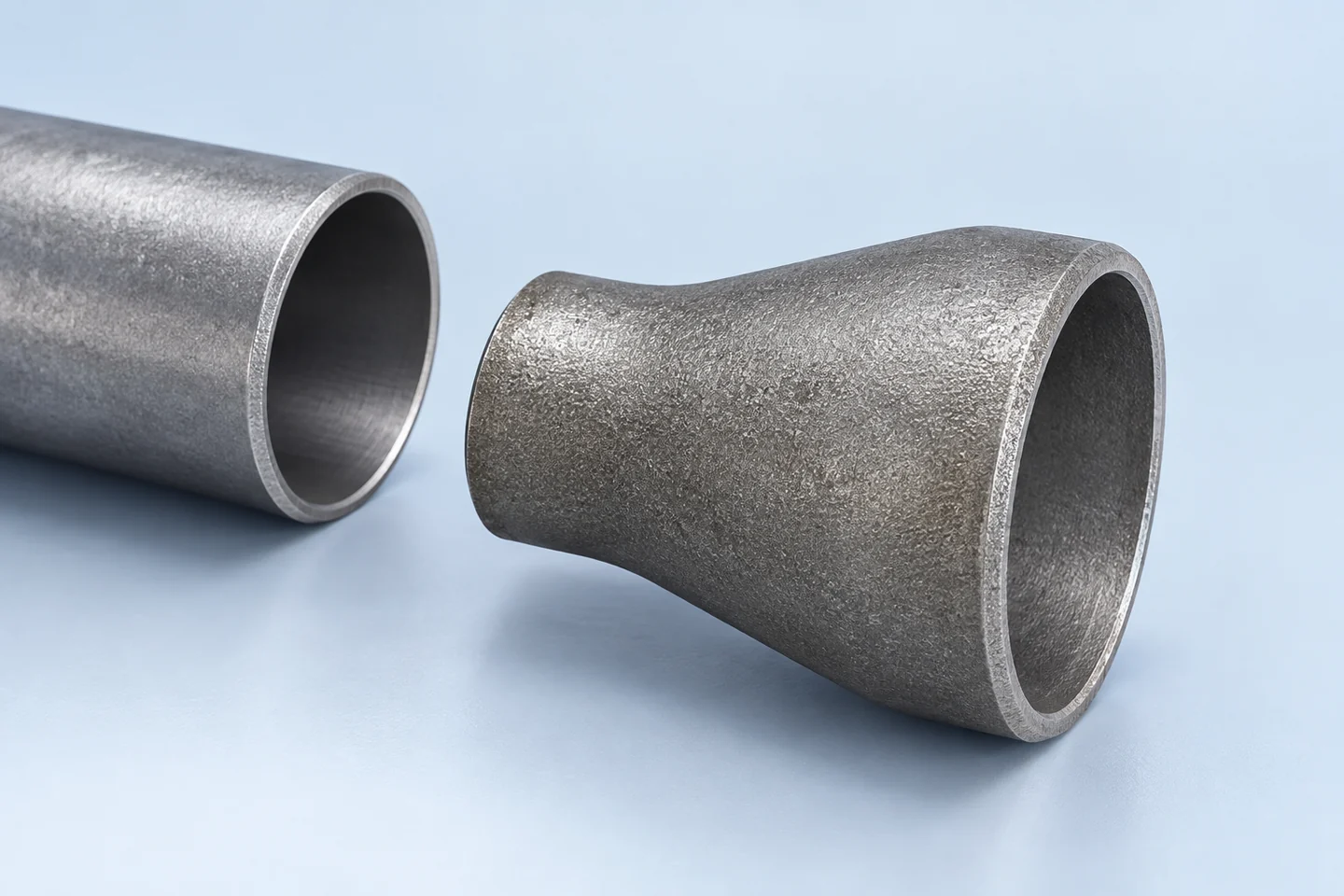
Wall labels stay connected to size
A schedule or XXS designation needs its dimensional context. We keep the size, applicable requirement and actual wall definition together for each end. Your drawing also controls any required end transition, so a general label never becomes an assumed machining instruction.
Catalogue reference. The approved specification defines the supplied configuration.No silent change to the supply basis
Material, body route and delivery state are reviewed as separate requirements. We identify departures in the offer and return them for approval. A similar catalogue reducer remains only a reference until its complete configuration matches the purchase item you have defined.
- ReviewMaterial and manufacturing inputs
- ClarifyConfiguration and departures
- AgreeAccepted supply baseline
Both ends checked before fabrication
Your dimensional record should let the workshop identify which result belongs to which end. We agree the measurements for end geometry, wall and transition against the approved requirements. The same drawing reference stays attached to the item through acceptance.
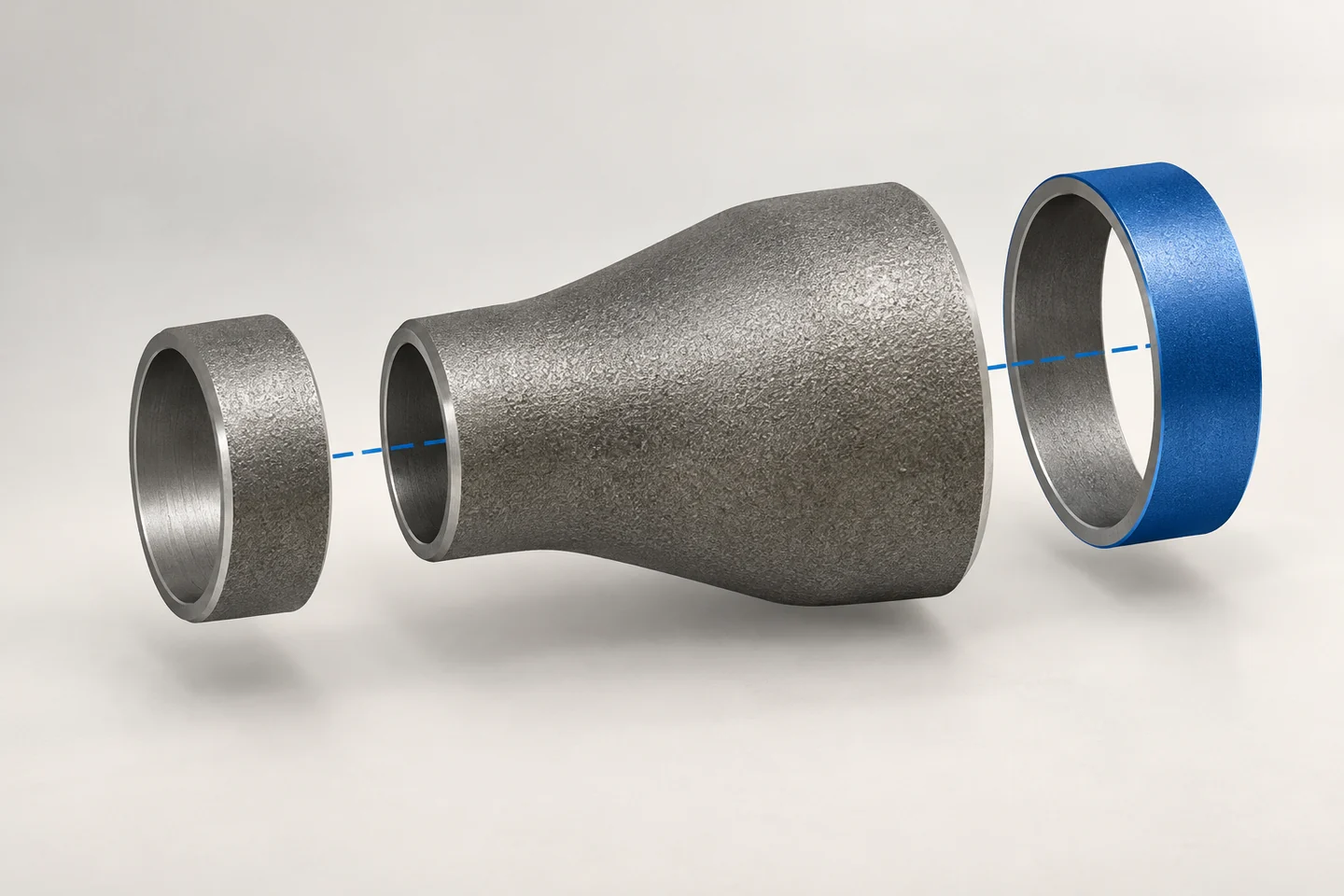
Inspection with an identifiable acceptance basis
The method and coverage should follow your project requirements, not a generic catalogue pressure description. We agree the critical checks, acceptance reference and records before release. Results should retain the item reference and units needed for an unambiguous receiving decision.
- FeaturesSpecified critical geometry
- MethodAgreed measurement approach
- BasisApproved drawing or requirement
- RecordItem-linked results
Engineering and supply stay aligned
You retain the piping design and approved transition requirements. We clarify the manufacturable supply configuration and any exceptions. Together, we close the technical baseline so the commercial purchase line describes the same reducer that the fabricator expects to join.
- YouApprove ends and transition
- WeDefine the supply configuration
- TogetherRelease the accepted item
Identification preserves the complete combination
A diameter pair alone may not distinguish two reducers with different end walls. We agree identification and packing that retain the full configuration reference. Repeat enquiries start from that baseline, while proposed changes remain visible before a replacement is accepted.
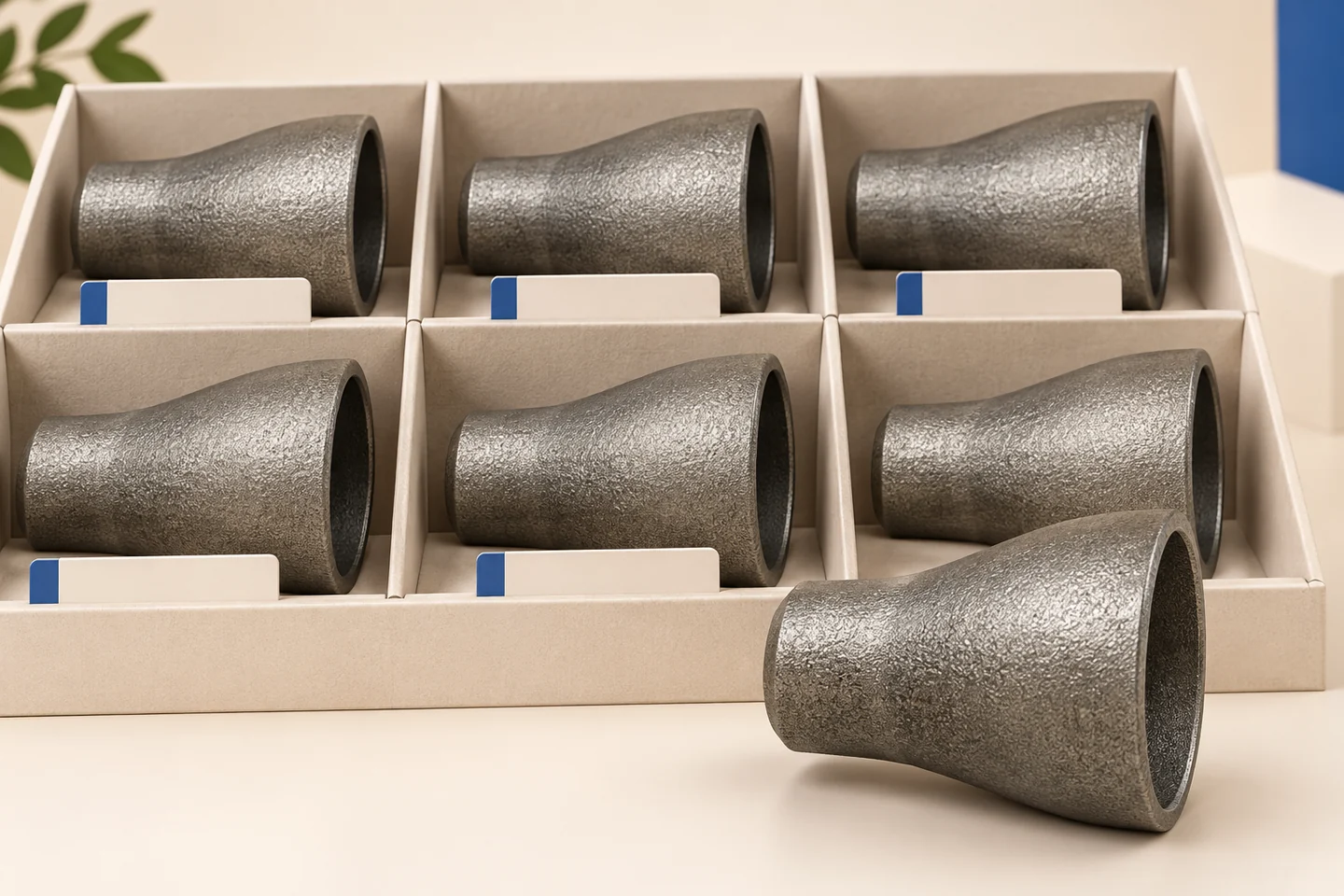
A clear start for your quotation
Send both end diameters and wall requirements, overall length, concentric or eccentric form, offset, material and approved end-transition drawing. Add quantities, drawing revision and inspection requirements so we can review the complete reducer purchase line.
Send your project details- SendDrawing, item list and requirements
- ReviewConfiguration, open points and records
- AgreeTechnical scope and commercial basis
