

Return to Harvester Cutting Problems and Replacement Checks
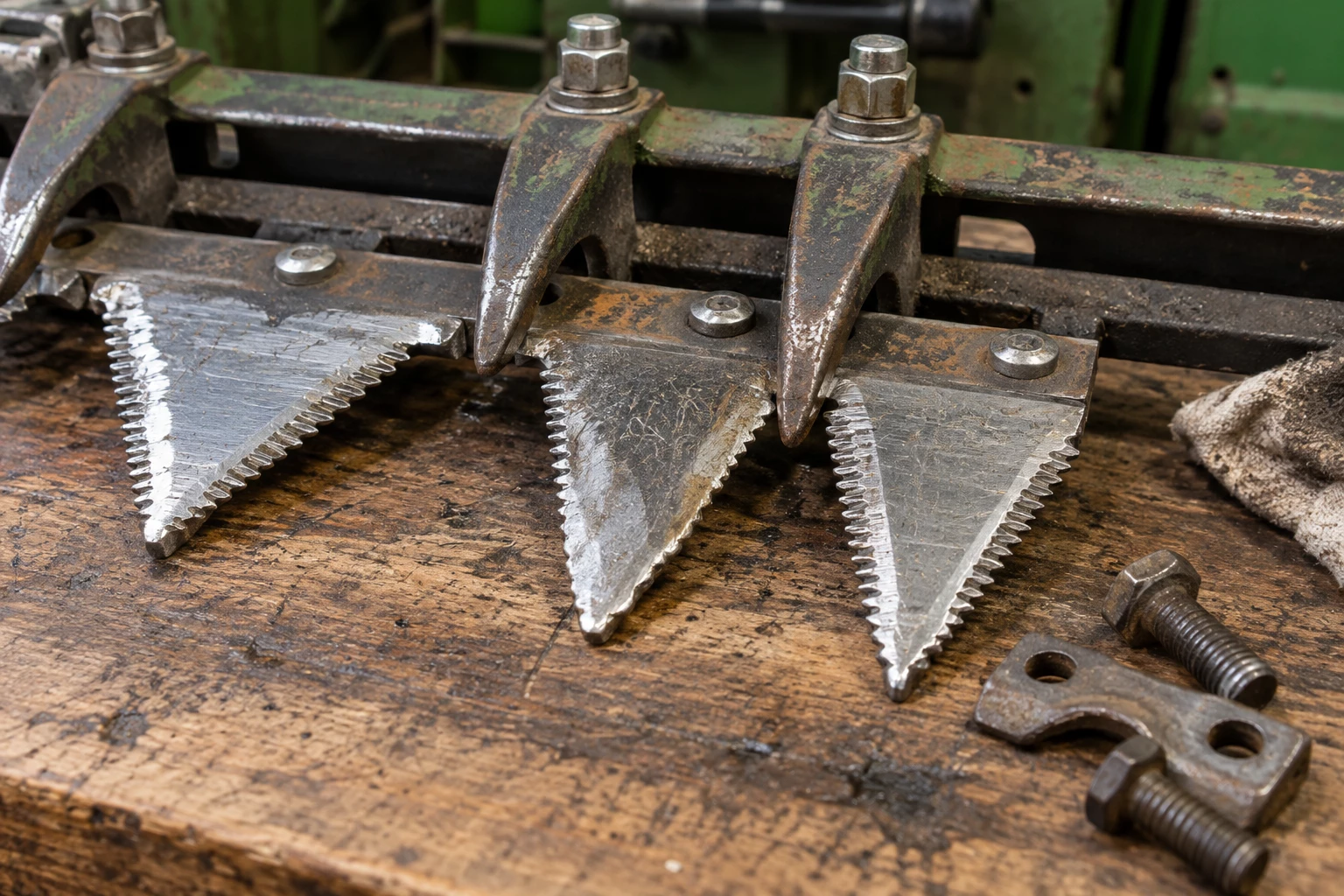
Uneven wear is evidence about the complete cutting system. It can point to alignment, register, hold-down clearance, mating-part condition, field abrasion or impact rather than a simple material failure.
Read the wear pattern across the cutterbar
For what uneven wear can reveal about harvester cutting parts, record each input with its unit, source and current status. Known values can be used immediately; unknown values should remain visible for confirmation instead of becoming silent quotation or production assumptions.
Connect sections, guards, hold-downs and alignment
Compare left/right and leading/trailing wear patterns
Compare the pattern across adjacent cutting components. Sections, guards, ledgers, hold-downs, register and knife-back alignment form one shearing system; replacing the newest visible wear point may not correct the cause. For this check, connect “Compare left/right and leading/trailing wear patterns” to symptom and crop condition.
Inspect new sections against worn guards
Compare the pattern across adjacent cutting components. Sections, guards, ledgers, hold-downs, register and knife-back alignment form one shearing system; replacing the newest visible wear point may not correct the cause. For this check, connect “Inspect new sections against worn guards” to photos across the cutterbar.
Check knife back, hold-downs and drive condition
Compare the pattern across adjacent cutting components. Sections, guards, ledgers, hold-downs, register and knife-back alignment form one shearing system; replacing the newest visible wear point may not correct the cause. For this check, connect “Check knife back, hold-downs and drive condition” to guard and section wear.
Review material and hardness only after system causes are considered
Connect chemistry, forming or forging, heat treatment, hardness method and test location to the required balance of wear resistance and impact toughness. A maximum number is not a universal durability target. For this check, connect “Review material and hardness only after system causes are considered” to hold-down clearance.
Replacement decisions that treat only the visible symptom
- Replacing one worn part while leaving the worn mating surface. Replace the shortcut with a visible assumption register for harvester cutting problems and replacement checks. Confirm the unknown through the buyer, drawing, sample or agreed inspection method before release. Record the correction point against symptom and crop condition.
- Calling every polished surface excessive hardness. Define wear, impact, fatigue, toughness and manufacturing constraints before choosing a target. More hardness or strength can introduce a different failure risk. Record the correction point against photos across the cutterbar.
- Using one close-up without a cutterbar-wide view. Replace the shortcut with a visible assumption register for harvester cutting problems and replacement checks. Confirm the unknown through the buyer, drawing, sample or agreed inspection method before release. Record the correction point against guard and section wear.
Turn field observations into a system check
Photograph the pattern across the assembly.
Start with symptom and crop condition and photos across the cutterbar. Include the governing drawing, sample, equipment reference or application context that explains where the information came from.
Record operating symptoms.
Separate confirmed values from open items, especially guard and section wear and hold-down clearance. This allows an early review without turning missing information into guessed requirements.
Check geometry and clearances.
Compare the route against ragged cutting can involve sharpness, register or clearance and plugging can involve guards, sections, hold-downs or crop flow. Record why one option is being advanced and what evidence is still needed.
Choose paired replacement or further material review.
Carry the same approved harvester cutting problems and replacement checks revision, assumptions and acceptance criteria into quotation, sample review, production, inspection, packing and repeat orders.
RELIA can review the available information for what uneven wear can reveal about harvester cutting parts, identify open items, and compare stock matching with custom production. Final product configuration and acceptance remain tied to the approved project information.
Send the current information for a project-specific review
You do not need to guess missing values before making contact about what uneven wear can reveal about harvester cutting parts. Send the confirmed information and mark the remaining decisions for discussion.
