

Full and Half Couplings for Equipment Connections
Your coupling choice starts with the connection it has to make. We review the full or half form alongside the equipment-side detail, pipe interface and material requirement. That gives your OEM purchase line a complete identity before samples or repeat quantities are discussed.
Send your project details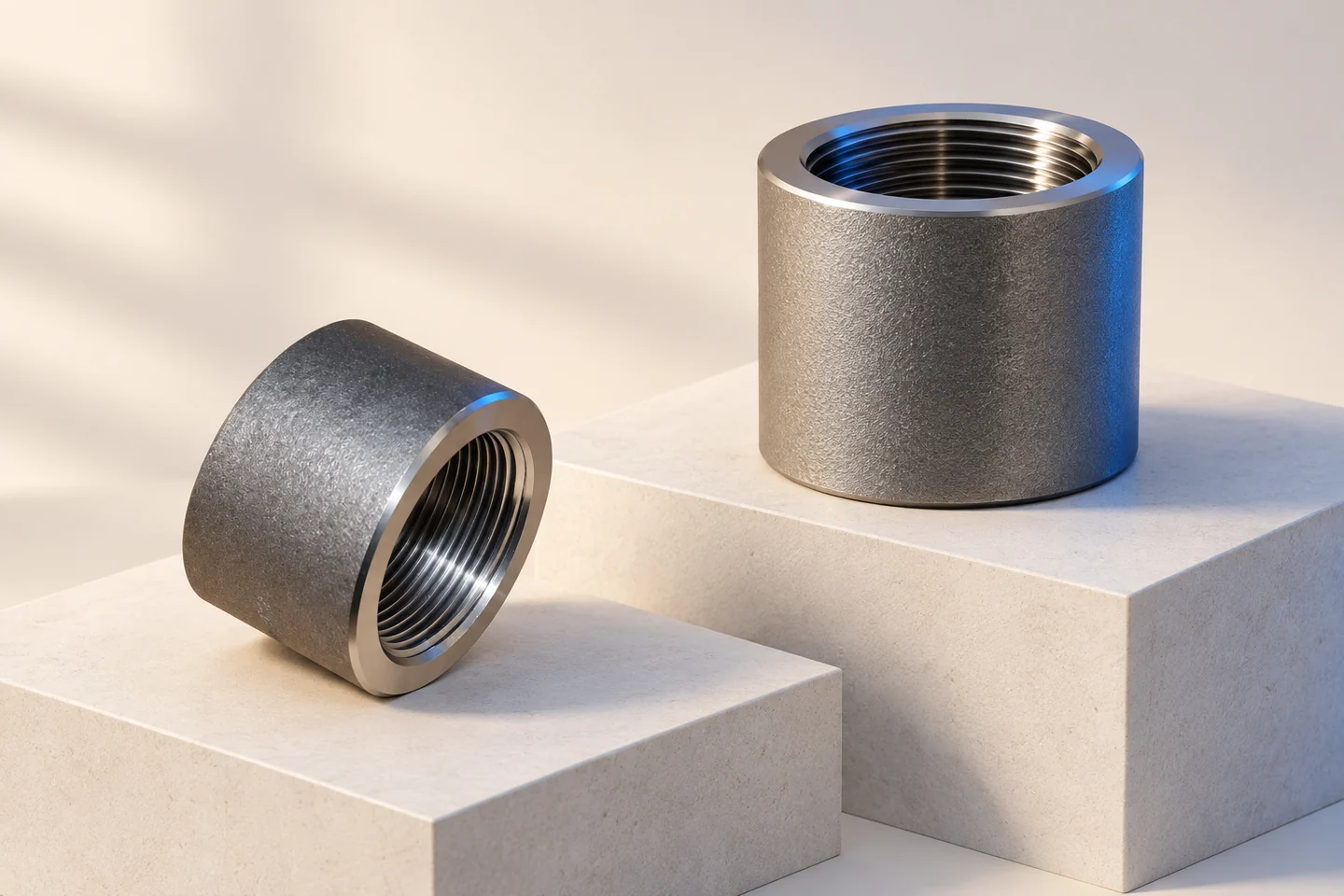
The connection function comes first
A pipe-to-pipe connection and an equipment-side connection can require different coupling details. Show the actual arrangement on your drawing. We use that arrangement to clarify the required form, rather than treating every short cylindrical fitting as the same purchase item.
- FunctionApproved connection task
- EquipmentEquipment-side joining detail
- PipeActual mating interface
The full or half form is defined by the drawing
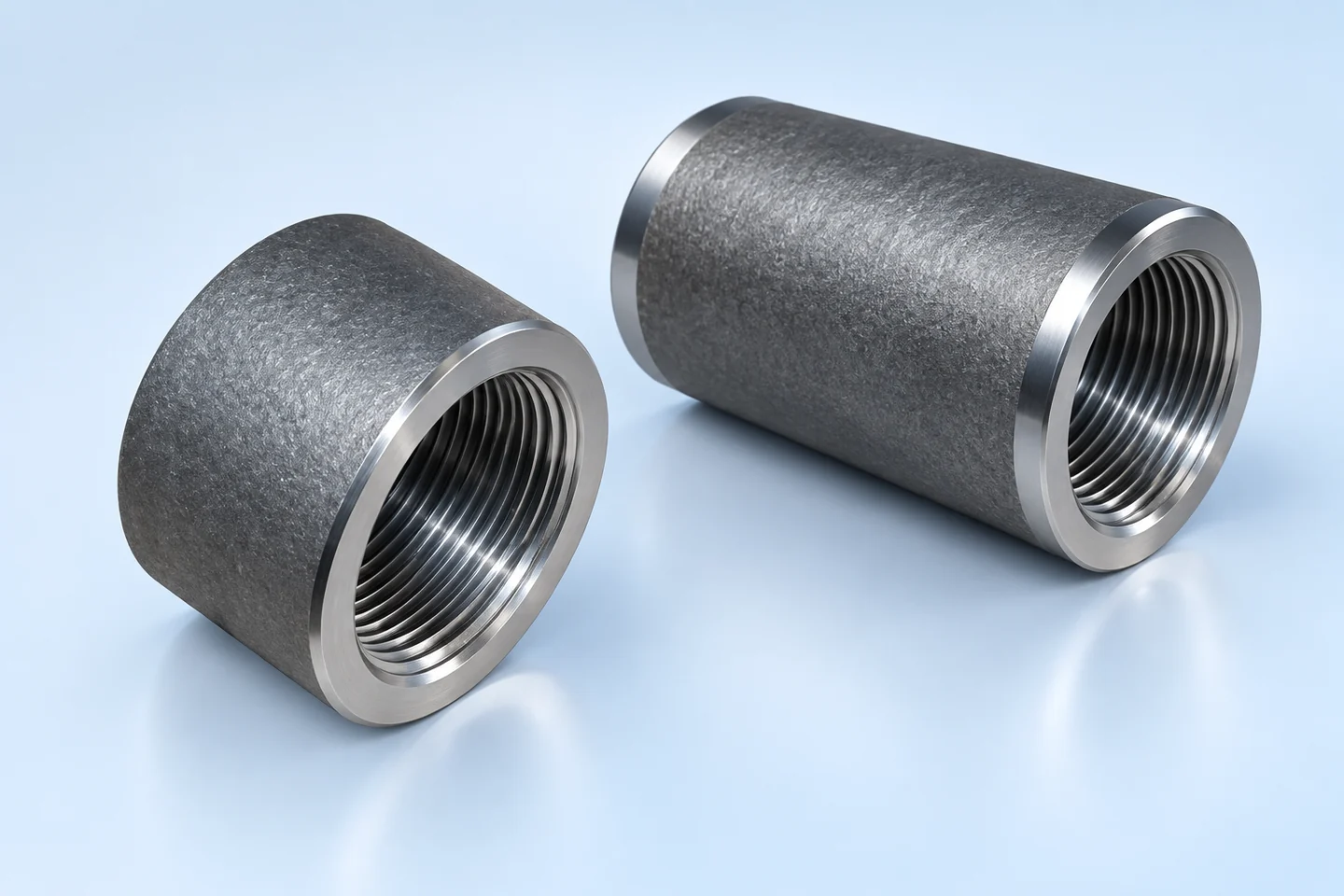
The overall and connection lengths matter to the assembly. We review the intended geometry, including the equipment-side joining requirement where applicable. A half coupling is a specified component, not permission to supply an arbitrary full coupling cut into two.
Thread and socket-weld details stay separate
A millimetre size option does not define a complete threaded connection. Retain the exact thread system and designation, or the required socket-weld geometry, with the enquiry. We keep these connection types separate through the quotation and configuration review.
Catalogue reference. The approved specification defines the supplied configuration.Material and condition remain explicit
Your selected grade, delivery condition and surface requirement describe the supplied component. We agree those details with the connection geometry and identify any departures. A catalogue label such as high pressure or polished does not replace that complete supply definition.
- SpecifyMaterial and condition
- ReviewConnection and surface scope
- AgreeAccepted configuration
Connection features checked against the requirement
Threaded and socket interfaces need checks suited to the actual feature. We agree the applicable dimensional or gauging approach and the acceptance reference with your specification. The evidence should identify the configuration being assessed, including the equipment-side geometry.
A small part with a complete identity
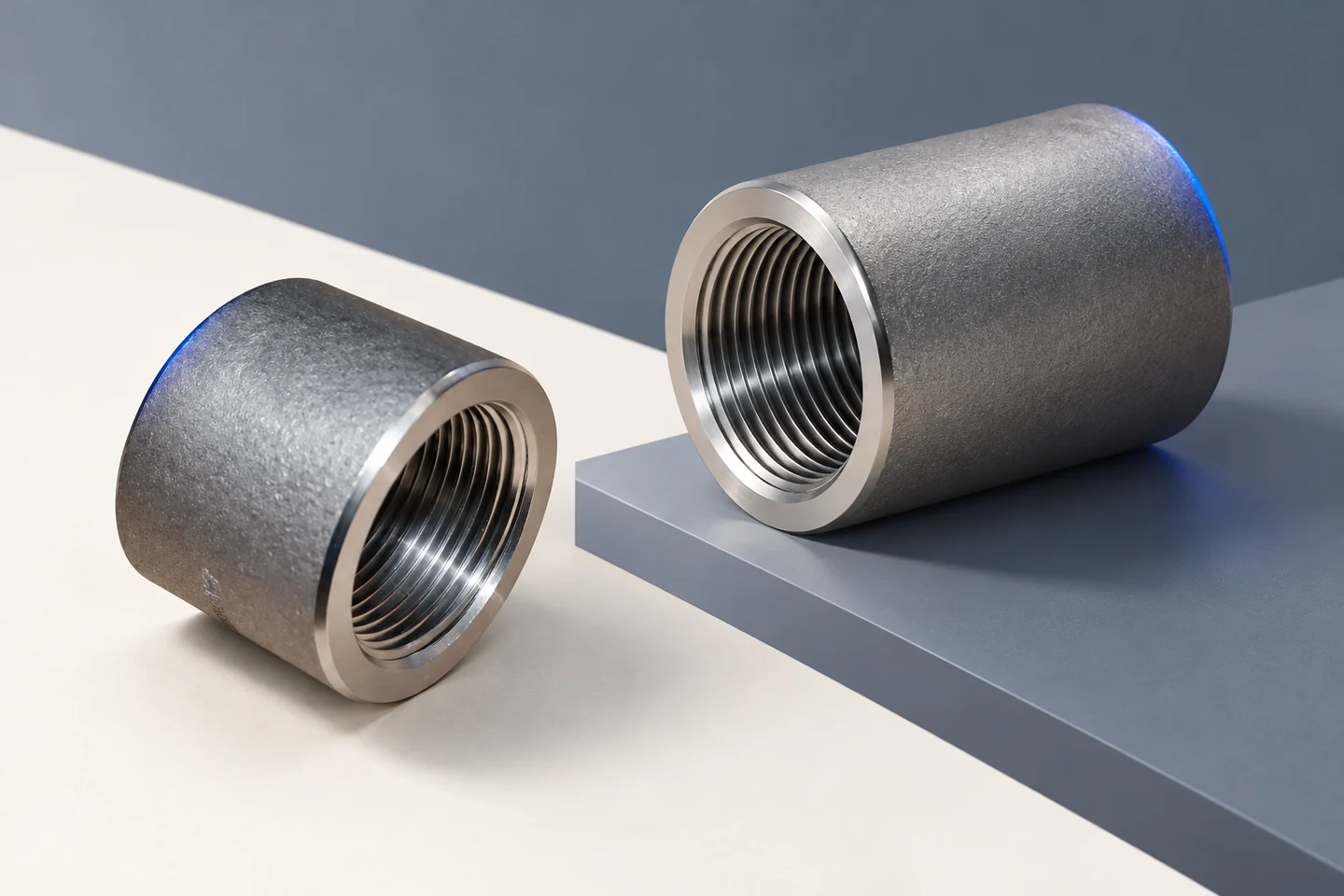
Similar couplings can be easy to confuse after receipt. We keep the full or half form, material and end details in the item definition. Agreed identification and inspection records then help your team distinguish accepted parts without relying only on their outside appearance.
- FormFull or half
- EndsDefined connection
- IdentityPart and batch
- RecordAgreed acceptance evidence
The first assembly creates a useful baseline
You confirm the equipment drawing and acceptance requirements. We clarify the coupling configuration and proposed checks. Together, we retain the first accepted definition for repeat orders, so a minor-looking change in length, thread or surface does not pass unnoticed into production.
- YouApprove the connection
- WeClarify supply and verification
- TogetherRetain the accepted baseline
Repeat quantities kept distinct
Your production team benefits from receiving parts under the correct equipment item code. We agree the packing and identification requirements with the order. Any proposed material or interface change returns for review before it replaces the accepted coupling configuration.
A clear start for your quotation
Send the equipment-port drawing, full or half form, exact thread or socket-weld requirement, overall and end dimensions, material and quantities. Include sample and inspection needs so we can review a complete coupling configuration.
Send your project details- SendDrawing, item list and requirements
- ReviewConfiguration, open points and records
- AgreeTechnical scope and commercial basis
