

Return to Metal Bellows Expansion Joint Selection
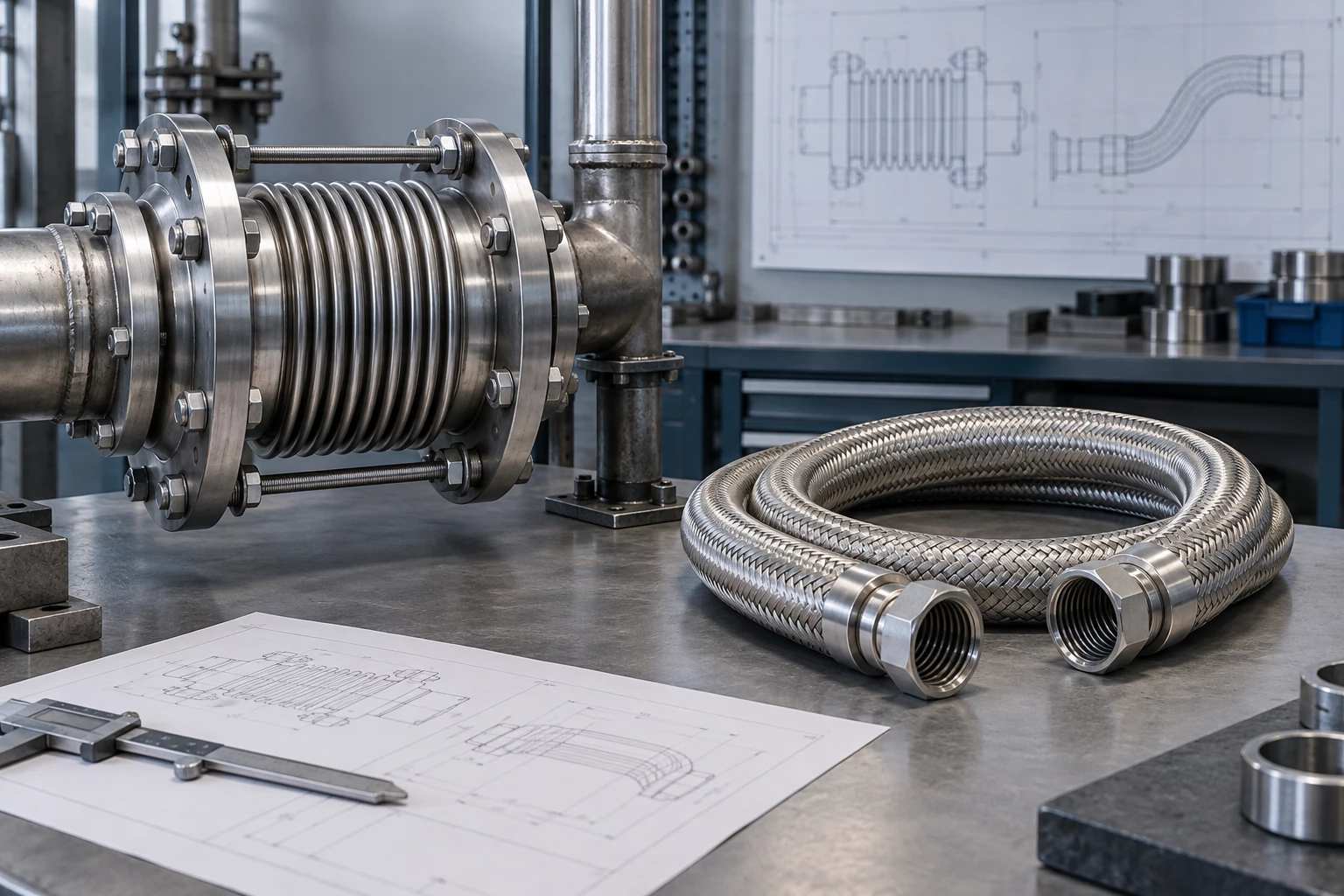
Metal bellows expansion joints and flexible metal hoses both use corrugated metal, but they solve different movement and installation problems. The choice begins with function, not appearance.
Define the movement before naming the component
For metal bellows or flexible metal hose: how to define the right function, record each input with its unit, source and current status. Known values can be used immediately; unknown values should remain visible for confirmation instead of becoming silent quotation or production assumptions.
Compare pressure restraint, routing and fatigue duty
Use bellows review for controlled pipeline thermal movement
State each direction and magnitude separately, then identify simultaneous movement and cycle pattern. Installation offset and operating travel are different demands and should not consume the same allowance unnoticed. For this check, connect “Use bellows review for controlled pipeline thermal movement” to axial, lateral and angular movement.
Use hose review for flexible connection or routed motion within bend limits
Define whether the need is controlled pipeline movement, routed flexibility or repeated bending. Check pressure restraint, live length, end orientation and torsion before treating corrugated-metal products as interchangeable. For this check, connect “Use hose review for flexible connection or routed motion within bend limits” to pressure and temperature.
Check pressure thrust and restraint around bellows
Show where forces and movement enter the surrounding system. A connector or isolator cannot be reviewed independently when anchors, guides, supports or rigid services control its real behavior. For this check, connect “Check pressure thrust and restraint around bellows” to cycle or operating pattern.
Prevent torsion and over-bending in hose assemblies
Define whether the need is controlled pipeline movement, routed flexibility or repeated bending. Check pressure restraint, live length, end orientation and torsion before treating corrugated-metal products as interchangeable. For this check, connect “Prevent torsion and over-bending in hose assemblies” to medium and corrosion conditions.
Similar appearance does not mean the same function
- Treating hose as an unrestricted expansion joint. Replace the shortcut with a visible assumption register for metal bellows expansion joint selection. Confirm the unknown through the buyer, drawing, sample or agreed inspection method before release. Record the correction point against axial, lateral and angular movement.
- Ignoring pressure thrust in a bellows system. Replace the shortcut with a visible assumption register for metal bellows expansion joint selection. Confirm the unknown through the buyer, drawing, sample or agreed inspection method before release. Record the correction point against pressure and temperature.
- Using overall length without defining live flexible length. Replace the shortcut with a visible assumption register for metal bellows expansion joint selection. Confirm the unknown through the buyer, drawing, sample or agreed inspection method before release. Record the correction point against cycle or operating pattern.
Choose the route by system behavior
Define the movement source.
Start with axial, lateral and angular movement and pressure and temperature. Include the governing drawing, sample, equipment reference or application context that explains where the information came from.
Map the installed geometry.
Separate confirmed values from open items, especially cycle or operating pattern and medium and corrosion conditions. This allows an early review without turning missing information into guessed requirements.
Compare assembly constraints.
Compare the route against movement mode and cycle expectation and pressure thrust, anchors and guides. Record why one option is being advanced and what evidence is still needed.
Confirm materials, ends and verification requirements.
Carry the same approved metal bellows expansion joint selection revision, assumptions and acceptance criteria into quotation, sample review, production, inspection, packing and repeat orders.
RELIA can review the available information for metal bellows or flexible metal hose: how to define the right function, identify open items, and compare stock matching with custom production. Final product configuration and acceptance remain tied to the approved project information.
Send the current information for a project-specific review
You do not need to guess missing values before making contact about metal bellows or flexible metal hose: how to define the right function. Send the confirmed information and mark the remaining decisions for discussion.
