

Custom Bends and Return Elbows for Equipment OEMs
When a standard elbow does not fit the equipment, define the whole bend path rather than changing one radius label. RELIA forms fittings and machines their ends to the agreed component requirements. This guide shows how end positions, straight lengths, rotation and bend geometry become a useful drawing for a custom return or bend. It also separates a dimensional first-article check from validation of the complete equipment, so the finished component is reviewed for the space it needs to occupy.
Discuss this purchase with RELIA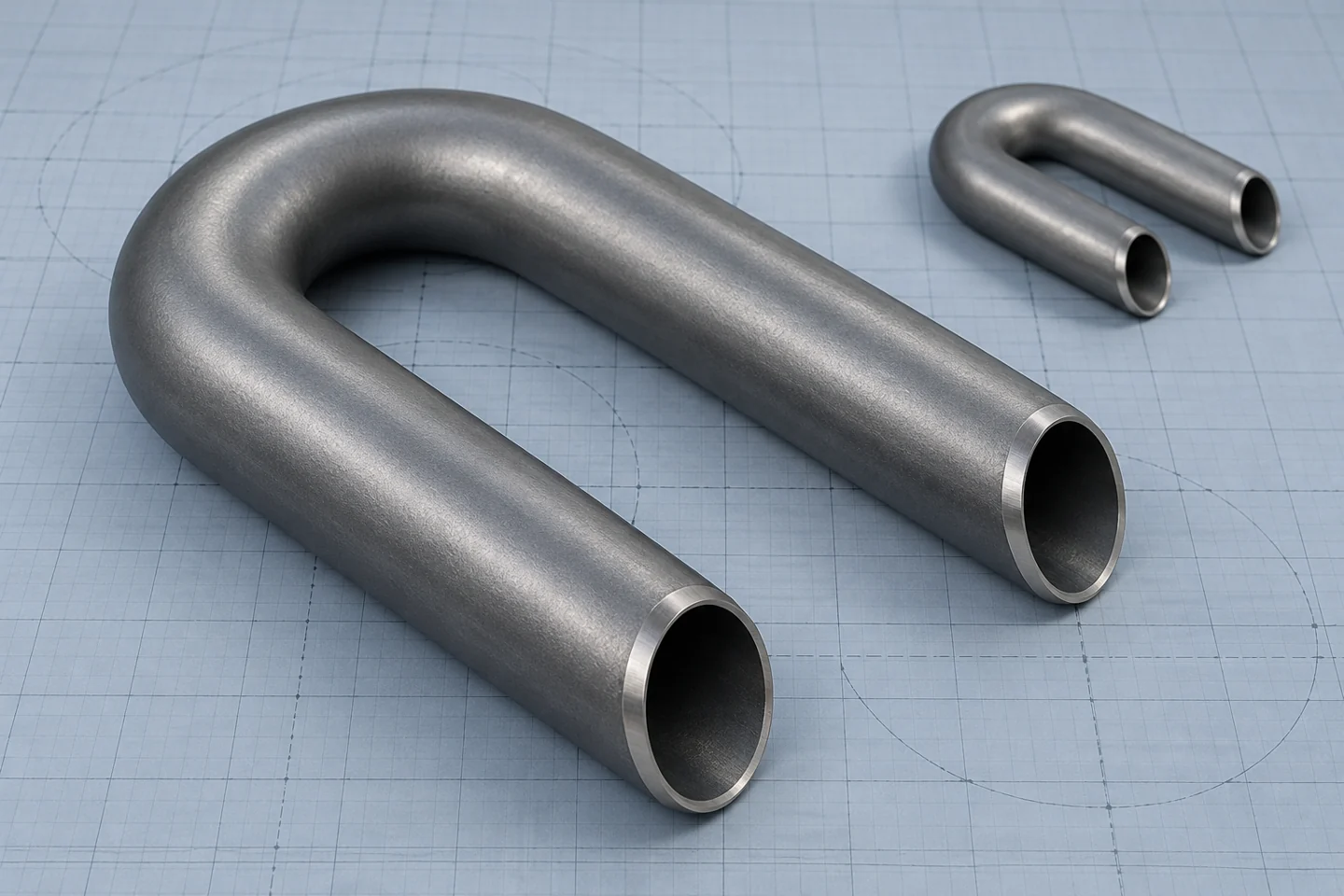
RELIA Forming for Defined Custom Bend Geometry
RELIA forms fittings and prepares connection ends in China. For a custom return or equipment bend, the useful manufacturing input is the complete path between the interfaces. We review the bend geometry, straight lengths, end directions and material together. A first-article dimensional review can then address the features that control installation. The exact forming route, tooling and allowable geometry are established for the actual material and section.
- RELIA in ChinaFitting forming and end preparation
- Your benefitBody geometry connected to fabrication fit
- Initial checksDimensions, material documents and pre-shipment condition
The complete path defines the custom bend
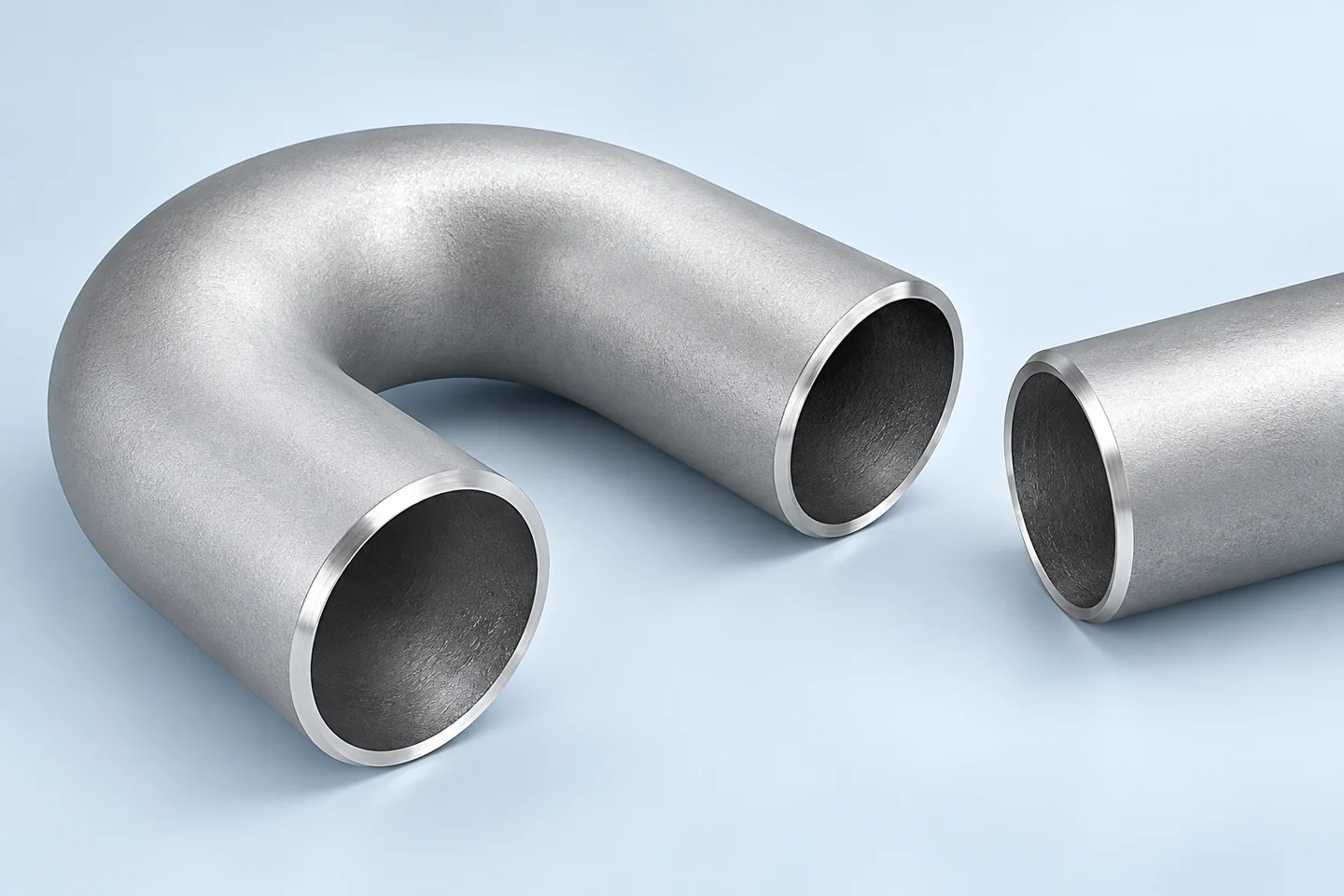
The catalogue includes a 180-degree return and a 180-degree 304 stainless U-bend enquiry. These references help identify the family, but a custom equipment route also needs the leg spacing, straight tangents and end directions. A 90-degree elbow picture cannot define a U return.
For an ideal semicircular U-bend with parallel legs, the centreline spacing is twice the centreline radius: C = 2R. The drawing still needs the straight lengths and end positions to define the full component.
Catalogue references support the enquiry. The accepted drawing, material definition and quotation identify the supplied configuration.
End positions and directions share one reference
Use a shared datum to locate both ends. Describe the end coordinates or dimension chain, the tangent lengths and the rotation of any non-planar section. A bend with the correct angle can still reach the wrong connection if the path is incomplete.
For an OEM enquiry, keep the material and starting tube dimensions alongside the path. Carbon steel and a 304 stainless reference are different manufacturing definitions; the approved design determines which belongs to the equipment.
| Parameter | Purchase meaning |
|---|---|
| References | Datums and drawing revision |
| Path | Radius, angle, tangents and rotation |
| Tube | Material, outside diameter and wall |
| Ends | Position, direction and joining detail |
Forming a route that fits the equipment
The manufacturing review connects the proposed blank or tube with the forming route, tools and end-finishing allowance. After forming, any agreed calibration and end trimming bring the component towards the defined path. The order should state which geometry is controlled on the finished part.
RELIA forms fittings and finishes their ends, while route-specific limits are reviewed for the requested section and material. We do not infer an unlimited minimum radius or end-position tolerance from a general custom-support label.
- DefineA complete path and section
- ReviewForming feasibility and tooling needs
- Form and finishCurve, calibration and end preparation as selected
- CheckFinished end positions and envelope
The finished envelope needs its own review
The curve is only part of the equipment fit. Leg spacing, straight lengths and end-axis direction determine whether the bend enters the assembly without forcing the mating components. A non-planar route also needs a rotational reference.
Use the outer envelope to review nearby equipment and supports. Our U-bend illustration explains the geometry family; the accepted drawing and first-article measurements establish the actual path.
First-article checks at the critical positions
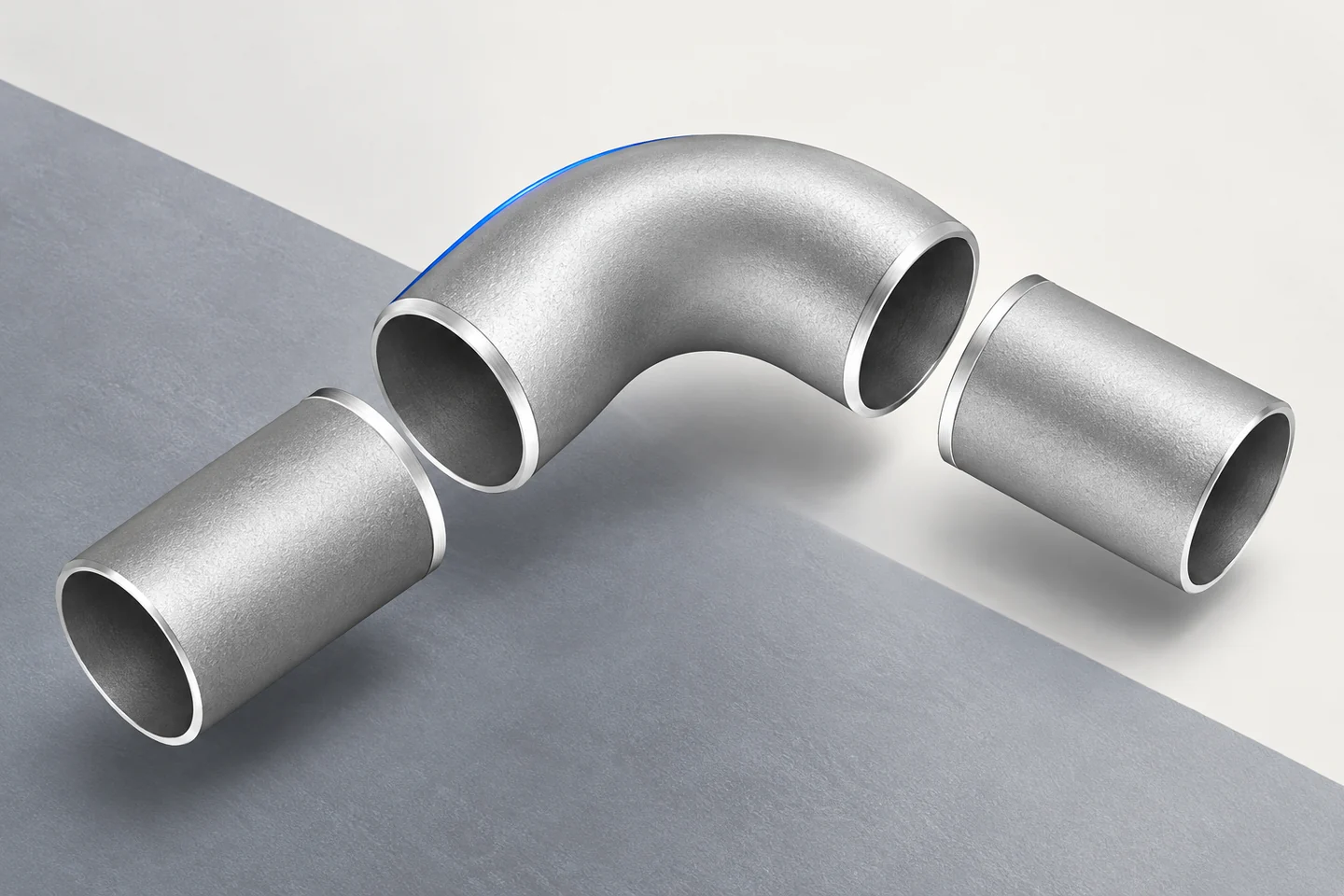
A first-article plan should measure the path rather than only the nominal tube diameter. Identify the end locations, leg spacing, tangent lengths and the specified section or wall checks. Include units and the drawing reference so the report can be compared directly with the equipment layout.
An agreed trial fit can support dimensional review. The equipment team still validates the complete assembly and service conditions; a successful fit is not proof of system performance.
| Parameter | Purchase meaning |
|---|---|
| Path checks | End locations, tangents and spacing |
| Section checks | Outside diameter, roundness and specified wall |
| End checks | Direction and preparation |
| Approval scope | Measured features and any agreed trial fit |
A drawing and measured part tell the same story
Useful custom-bend evidence joins the path drawing, the produced component and the measured features. RELIA can provide actual production or inspection photographs and anonymised drawings or records where appropriate. A genuine photograph should show the feature discussed rather than simply a visually smooth curve.
The standard carbon-steel elbow guide addresses an already selected angle/radius item. This page addresses the additional definition needed when the route itself is part of the OEM manufacturing review.
- InputDimensioned path or model with datums
- ManufactureSelected route and end-finishing scope
- EvidenceFinished-path measurements
- ReleaseAccepted component revision
The approved shape becomes the repeat reference
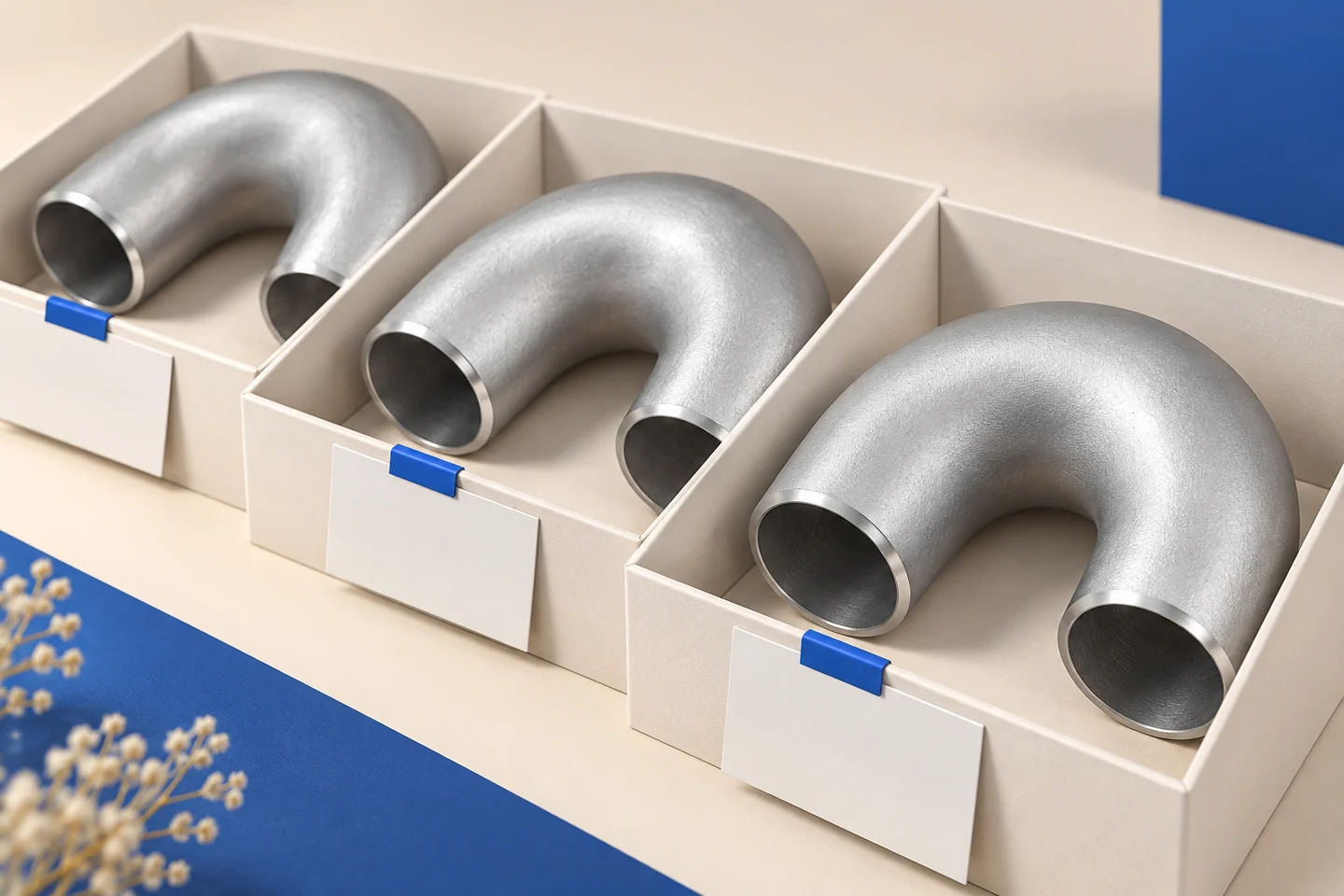
Protect both ends and keep different path variants identifiable in packing. Components with the same material and diameter can still have different tangents or rotations, so the drawing or OEM part reference should remain visible on the delivery list.
For repeat enquiries, start from the accepted path and review proposed changes to material, radius or end requirements. This avoids turning a small commercial reorder into an unnoticed geometry change.
Contact RELIA for Your Purchase Specification
Send a dimensioned path or model with datums, centreline radius, leg spacing, tangents, end coordinates and directions, material, outside diameter, wall and joining details. Include sample and production quantities so RELIA can review the manufacturing route.
- DefineDrawing, configuration and quantities
- ReviewManufacturing scope and inspection requirements
- QuoteA clear technical and commercial basis
